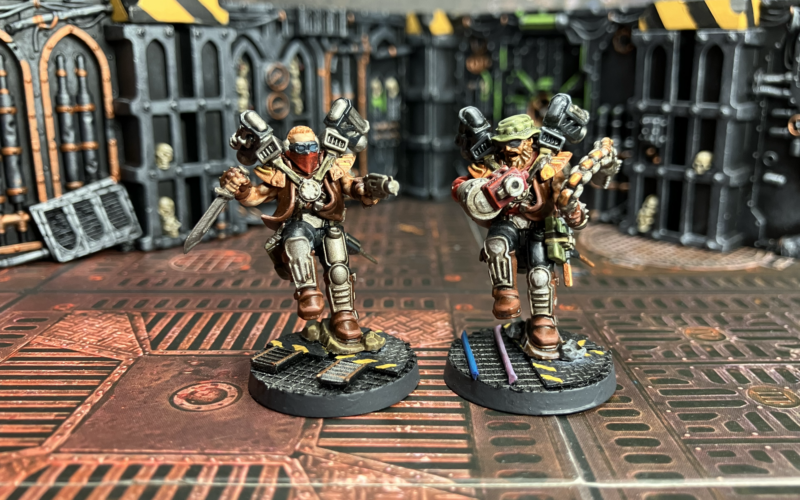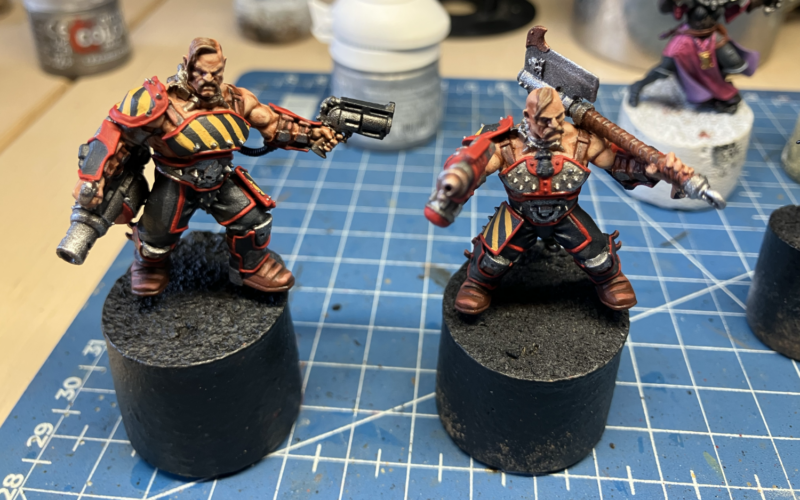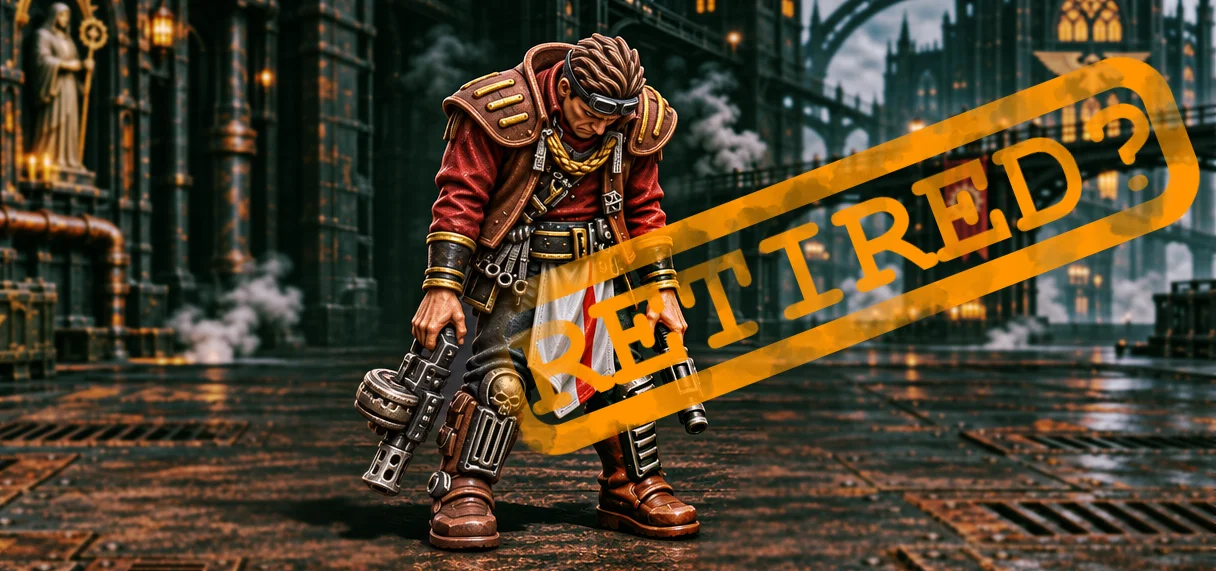
Picture a Rebel operative scrambling across a loading bay to reach an astromech carrying stolen Imperial data. Two squads are exchanging blaster fire, a transport is warming its engines, and suddenly the least imposing miniature on the table has become the most important one. The droid is not another combat unit. It is the reason the battle has a story. And a week earlier, the very same figure might have been sitting unused in a storage box. Perhaps the rules changed, perhaps the army did, or perhaps there was simply no longer a place for it in the list. Either way, that carefully assembled and painted miniature had been put away with the spare bases, mismatched arms, and the optimistic promise that it would come in handy someday. Which, in hobby terms, is roughly the same as promising to clean out the garage.
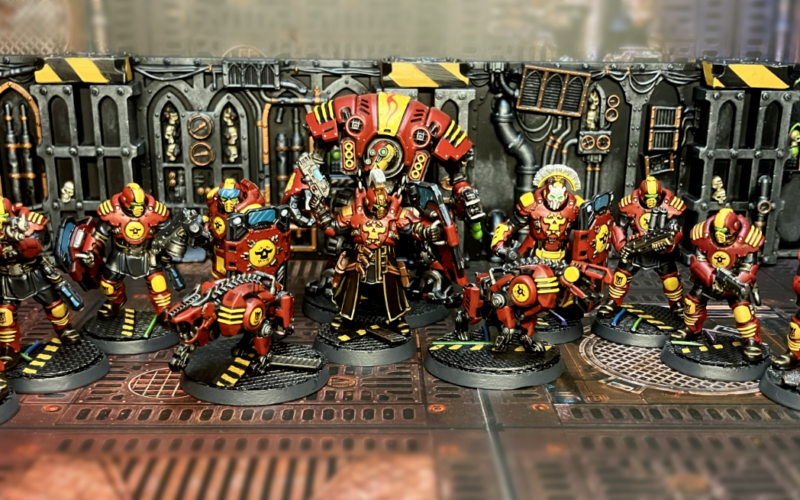
That problem has already produced some wonderfully practical thinking. The frustration behind Enduring the New Edition Tax is not merely about points and legal equipment: it is about losing the use of something you made. The follow-up, Paid The Tax? Reap The Rewards, finds one solution in a new gang that can absorb unwanted fighters. But there is another possibility, especially for narrative games: give the miniature a different job altogether.
I like Star Wars: Legion as a starting point because its battles take place in a galaxy where an enormous number of people are trying very hard not to become part of the fight. Somebody has to repair the moisture vaporators, somebody has to deliver a manifest, and somebody has almost certainly misplaced the one access code that everybody suddenly needs. Those ordinary jobs can provide an extraordinary amount of trouble for an army. The spare soldier on your shelf need not return as a stronger soldier; that figure can become the reason the soldiers have turned up in the first place.
Start with the job, not the paint
Star Wars already offers a wonderful example of how much a familiar uniform can conceal. In Andor, Lonni Jung is a supervisor in the Imperial Security Bureau, secretly feeding information to the Rebellion. At work, he still looks like an Imperial officer; his real allegiance is invisible to the people around him. Put an ordinary officer miniature beside a data terminal and give it the job of passing a message to a Rebel contact. You have created the center of a tense scenario without touching the paint, the pose, or even the base. The miniature is still an Imperial officer. The story knows something the uniform does not.
A spare Imperial trooper might become an ex-soldier guiding Rebels
For an older example, think of Kyle Katarn, the former Imperial officer who became a freelance operative for the Rebel Alliance in the Legends story of Star Wars: Dark Forces. He did not wear one unchanging outfit throughout his career, but his change of allegiance makes the same useful point: a character’s purpose can change even when the miniature you have available cannot. A spare Imperial trooper might become an ex-soldier guiding Rebels through the facility he once guarded, or an undercover contact still wearing Imperial armor. Neither needs a new profile sculpted in plastic. They just need a new job and a reason to be on the table.
Once you have picked the new role, give that character a name and one sentence of purpose. Tavi, the courier, has to reach the communications tower. Lieutenant Venn has information neither side can afford to lose. Unit R4 has a corrupted navigation file that must be recovered before the shuttle launches. Keep it that simple. If a player cannot explain the miniature’s role in the time it takes to pick it up, the scenario has more background than it needs.
Now decide how a player can interact with the model. Perhaps a unit spends an agreed action beside the courier to collect the message token. Perhaps the officer marks an objective that cannot be claimed until another terminal is reached. Perhaps the droid is just itself a visible objective to protect. A single interaction is usually enough. Nobody needs a three-page character sheet for a frightened mechanic who is already having a difficult Tuesday.
For an official Legion game, follow the current Star Wars: Legion rules and mission documents and keep the required objective markers and measurements intact. The ideas here are for agreed narrative house games, where a retired miniature can change the story without quietly rewriting the rules.
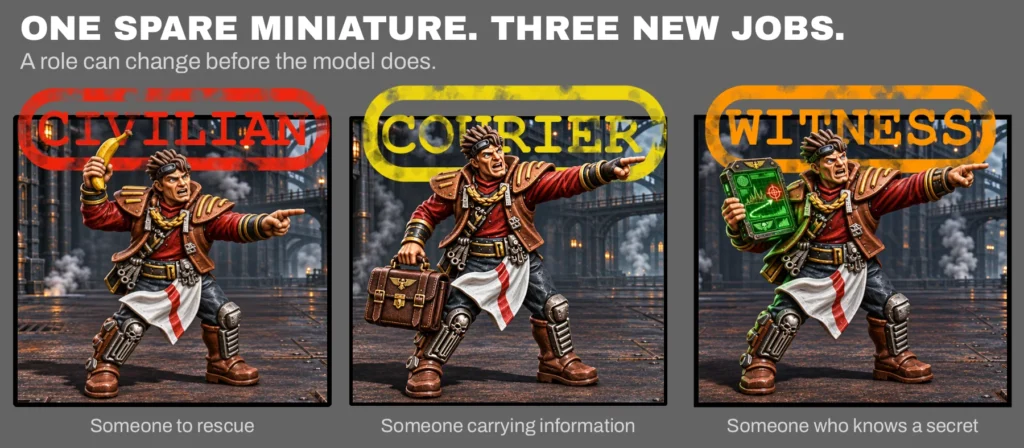
The Three Lives of a Single Spare Figure
With the smallest modifications, the easiest second life for a miniature is as a civilian. Choose a trooper who could plausibly belong in the setting, then add one small clue: a satchel, a toolbox, a neutral-colored base ring or a crate beside the figure. You do not have to saw off every weapon to make the point. The miniature may be an ex-soldier, an off-duty guard or someone who has decided that tonight is an excellent time to surrender. What matters is that both players agree this figure is a character in the scene, not another combat unit.
keep the required official objective token and treat the extra miniature as decoration beside it
The next best use is as a living objective. In a home-made scenario, a spare officer, scout, or droid can represent a location that might otherwise just be a token. Give the figure a clearly marked base or put a separate removable marker beside it and write its interaction on a small card. Atomic Mass Games has also shown how a handful of spare scenery pieces can make objectives feel like real places, in its guide to building objective markers. For an official mission, keep the required official objective token and treat the extra miniature as decoration beside it; do not assume a figure may replace a token for distance or placement measurements.
The last use might be as a recurring scenario character. A battered stormtrooper could appear first as a prisoner, later as an informant, and finally as the very unreliable guide hired to get everybody out of trouble. You have not given them better statistics. You have given them continuity. A small gaming group can build a surprisingly convincing corner of the galaxy when one familiar face keeps returning, usually with an explanation that is not entirely convincing.
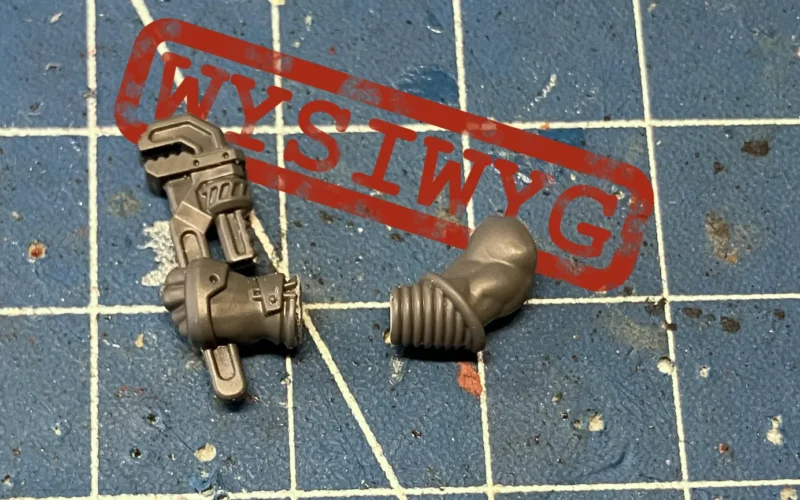
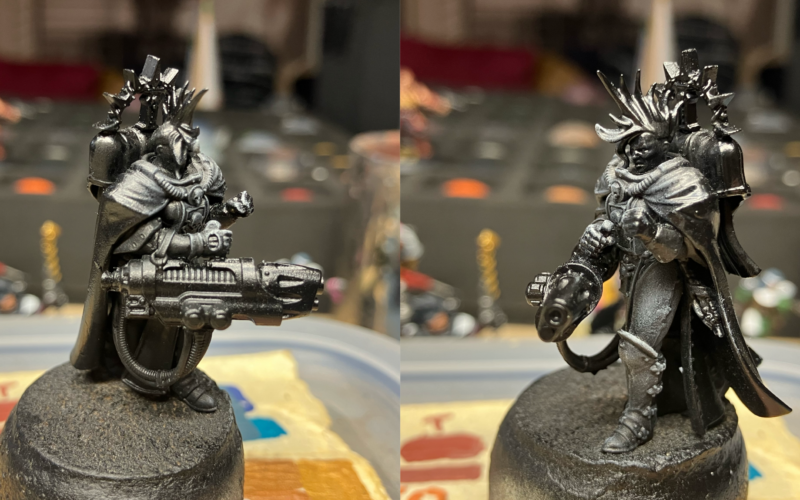
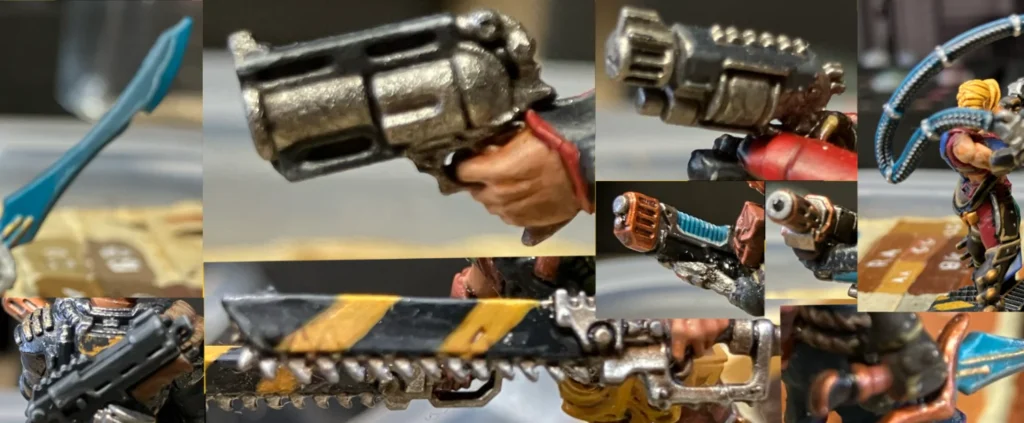
You can keep the physical conversion modest. There is real pleasure in a tiny weapon swap, a change of pose, or a dab of putty. For a scenario miniature, I would go smaller still. Try a removable base ring before re-basing entirely or repainting a whole uniform. Glue a tiny data case to a spare base instead of modifying a carefully finished model. If the figure comes back to the regular army next month, you should not need surgery to make that possible.
The Courier Who Knows Too Much: A Scenario
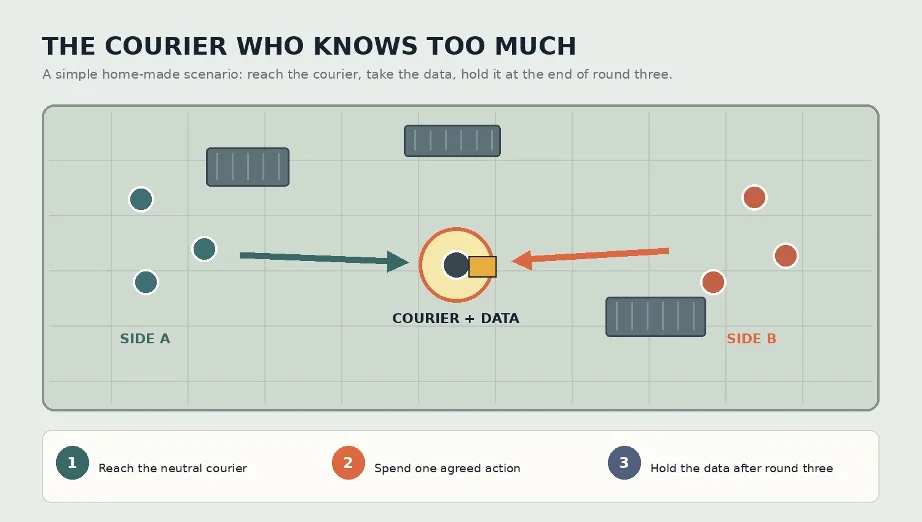
Here is a short, self-contained scenario to test the idea without rewriting an entire game. Find one spare infantry-sized figure, a separate token to represent stolen data, and a piece of terrain that looks like a loading bay. Put the courier near the center of the table, somewhere both sides can reasonably reach. Agree its location before play and make sure both players understand that this is a neutral scenario character, not a combat unit. It never activates, attacks, or takes damage.
House rules should be easy to fix, not defended like a sacred text
In this agreed three-round house game, a unit that reaches base contact with the courier may spend one of its actions to collect the data token. The courier stays where it is. The collecting unit carries the token; if it is defeated, leave the token where its miniature was removed so another unit can collect it using the same action. At the end of round three, whichever side carries the data wins this narrative scenario. If neither side has it, the result is a draw. That is the entire special rule. It is not an alternative scoring system for official Legion missions.
This works because the miniature offers information before the dice come out. It tells both players which part of the table matters and gives them a reason to move toward it. You could replace the courier with an astromech, a supply officer, or a bewildered customs inspector. The mechanics would remain the same, and the story would change completely. If the first playtest turns the middle of the table into an unbreakable traffic jam, move the courier or shorten the interaction. House rules should be easy to fix, not defended like a sacred text.
Make it legible, then leave it alone
The final test is whether the figure makes sense from the other side of the table. Put it down among the terrain and ask another player, without explaining your masterpiece, what they think it is for. If they assume it is an ordinary trooper, add a colored ring, a nearby crate or an obvious token. If they immediately say, ‘That’s the person we have to rescue,’ the job is done. Keep the name and the one-line rule on an index card. There is very little to gain from making a character beautiful if no one can tell how to interact with it.
Across the history of Star Wars games, the spotlight has moved between pilots, soldiers, smugglers, and other people with jobs to do. That variety becomes clear when you look through a chronological history of Star Wars video games. A tabletop battle has room for the same shift in perspective. It can make the person with the broken radio more important than the person with the lightsaber. A tiny figure that once filled out a squad can suddenly make an entire evening’s story possible.
So before putting a retired miniature back into the box, give it a name, a job and one clear rule. Make the smallest change you can get away with, then put it on the table. It may never win another firefight. That is fine. Somebody has to tell the heroes where they left the shuttle.
This post uses art created in part by GPT Image 2 based on a miniature built and painted by hand.