My wife and I were at a couple’s house for dinner that we’re good friends with. They’re avid game players. Or… at least he is. She might be game because he likes games so much. But, together, we’ve played a lot of games together in a large part because they have so many!
It’s a smorgasbord of options every time we go over. He’s a massive fan of Nemesis and is probably like me with Necromunda–mention the game and his response would be, “When and where? I’ll be there!” I’m unsure about it, myself, and my wife doesn’t like games that she sees as taking longer to set up than to actually play. Nemesis isn’t that bad but the setup time isn’t zero.
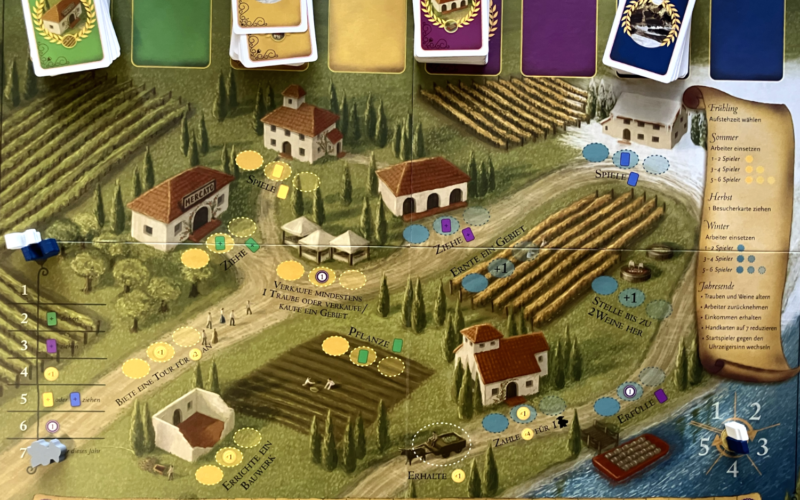
So we generally play the more simple side of the “euro” game experience. Viticulture, for instance, was a game we first played with this couple.
American board games come in three types–Monopoly, Scrabble, or Chutes & Ladders
Quick aside: let me define the “euro-game” as I’ve experienced it as an American where board games come in three types–Monopoly, Scrabble, or Chutes & Ladders. Euro-games are games that want to mimic some kind of system, be it wine making, tavern running, shipping between planets, you name it, in game form that usually have two or more forms of game resources or currencies to represent the balance one has to strike between doing one thing versus the other.
It’s not a perfect definition but… it’s more or less accurate as far as I can see. There’s no judgement in it. Whereas one could also say, “They’re games for adults” which might also be true, I don’t think that’s strictly the case. A degree of complexity doesn’t rule out family involvement. And they’re certainly more interesting for the whole family than playing, say, Chutes & Ladders would be for dad.
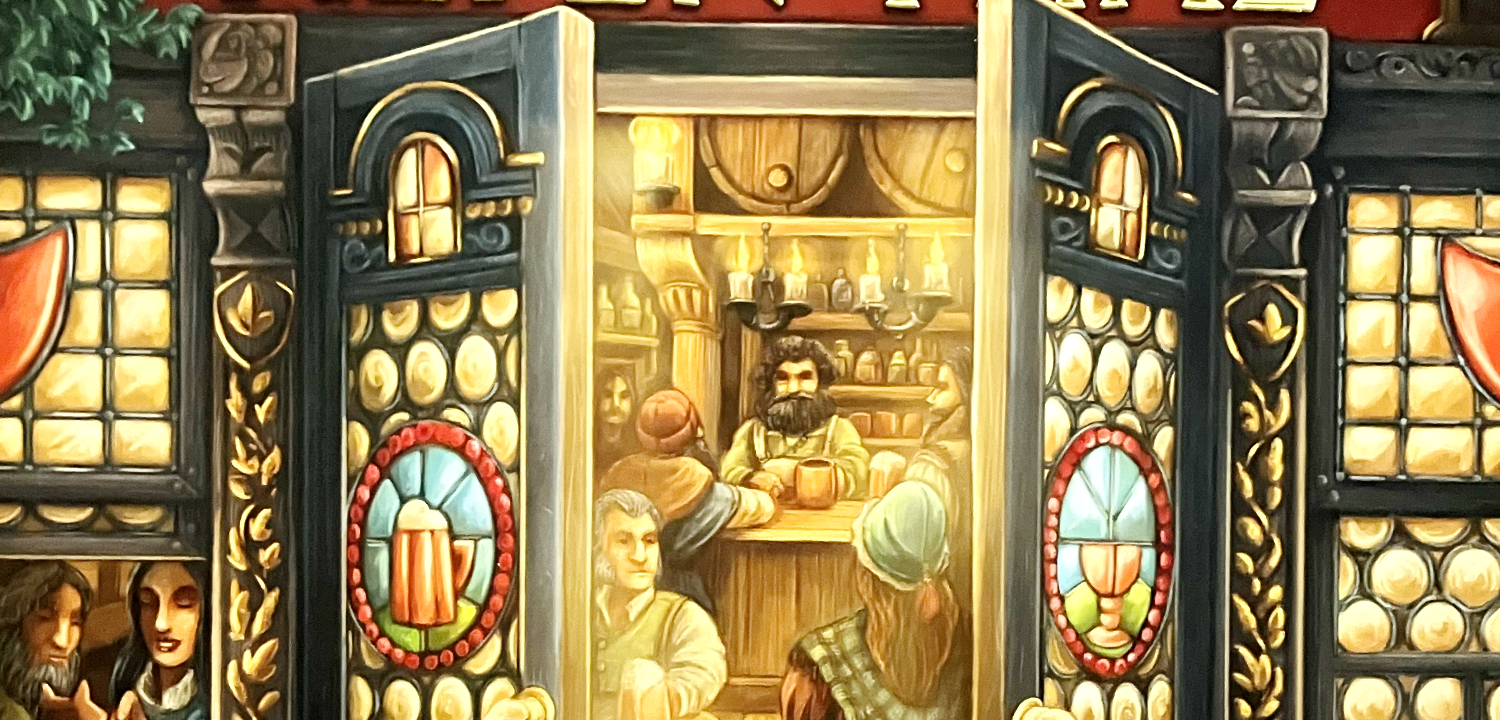
All of this is a big wind up to saying that, after an excellent meal, we sat down to play a game we’d played once before, Die Tavernen im Tiefen Thal, a game about running a tavern, however successfully you can. And to qualify as a “euro-game” the available resources include gold, beer, and schnapps while simulating to some degree the running of a bar.
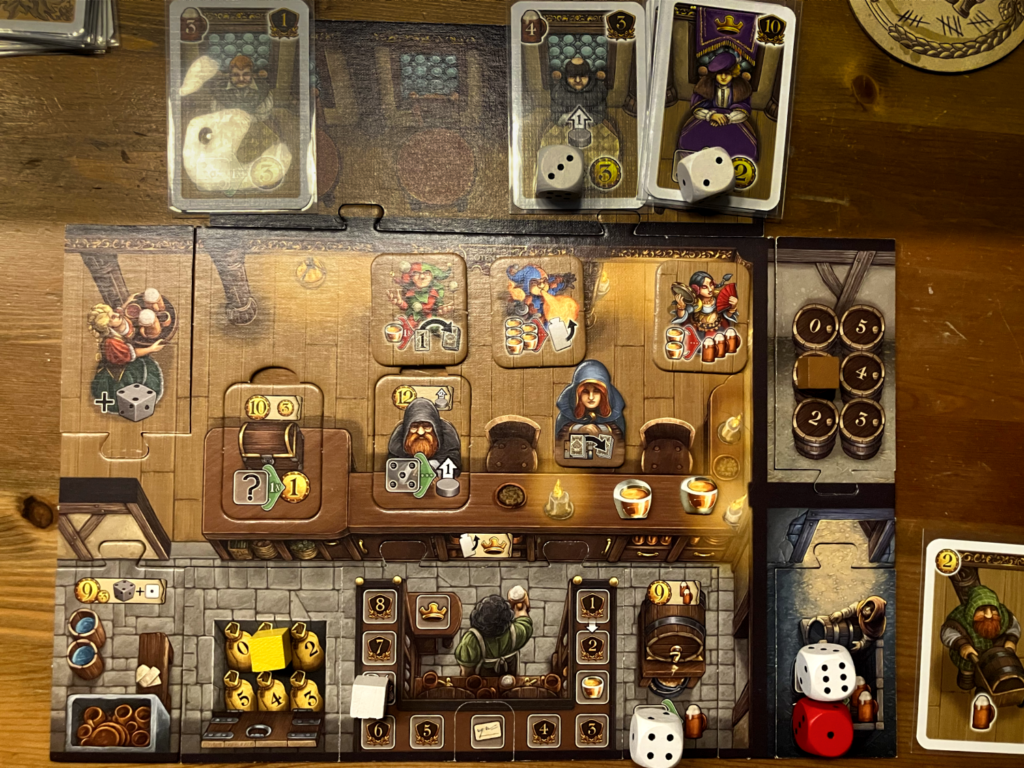
It has a fun mechanic which is that everyone gets four dice and everyone shakes their dice in a cup. Then, from those dice, you pick one to activate an action on your game board. But then you pass the rest of the dice to the player next to you! So, to some degree, there’s randomness but also a degree of strategy as you decide what die you pick now from the dice pools being passed around the table. And those dice inform what actions you can do when it’s your turn, things like brewing beer, taking a customer’s order, advancing your bonus track. The end goal is to attract nobles to your tavern as they represent the most victory points.
How you do that is where the game lives. If you brew a massive amount of beer you can attract one to three nobles. If you upgrade a part of your tavern, you attract a noble. If you complete a particular track in your bar duties or guestbook, noble. Along the way, you acquire helpers, improve your tavern, have mysterious visitors. And it’s all done in eight rounds.
When we played last night, it took a minute to set up but I think we played a full game in about ninety minutes. A ninety minute game is what I would classify as a medium length game. It’s not Cribbage. But it’s not Nemesis or Cursed City. And the setup falls right into the same slot in terms of time.
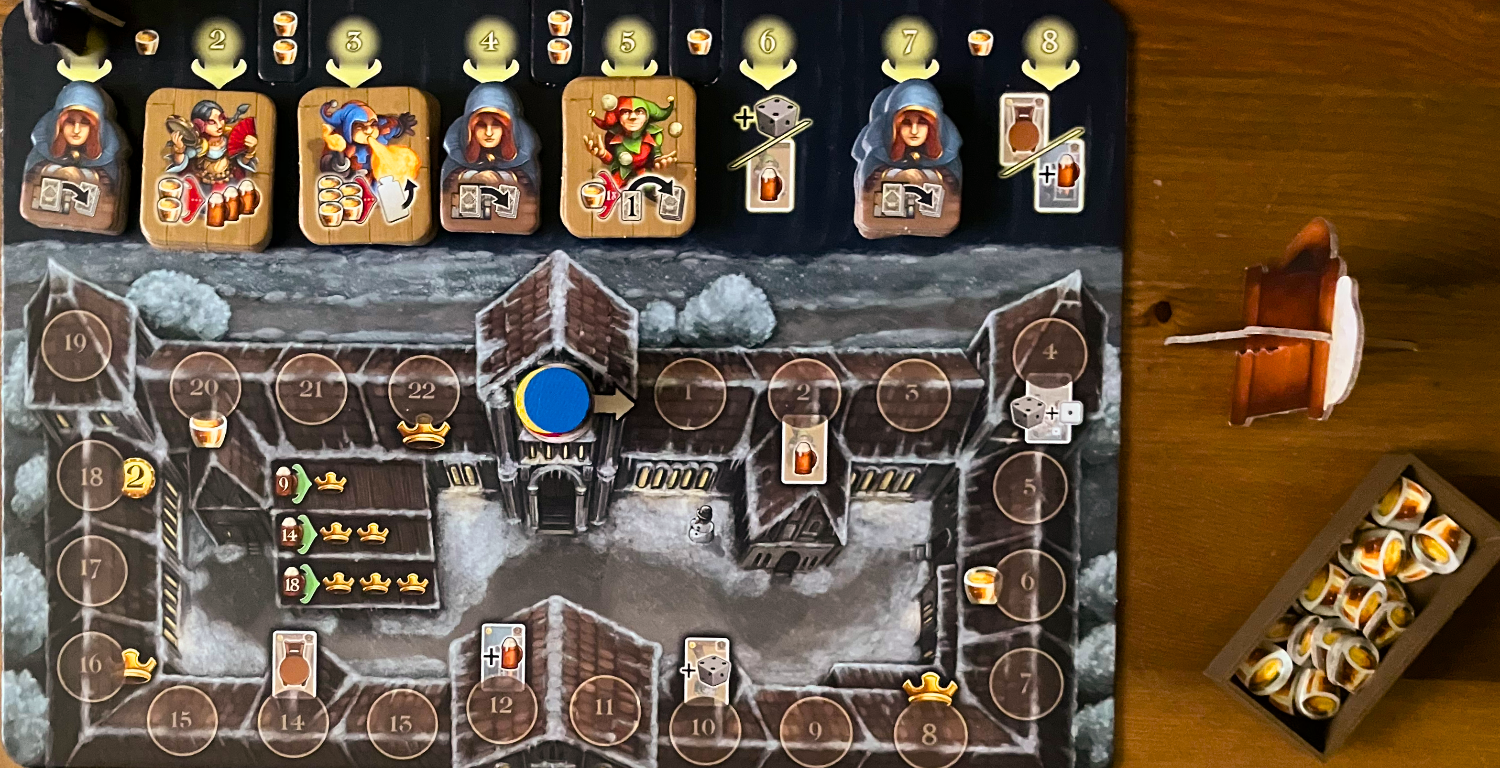
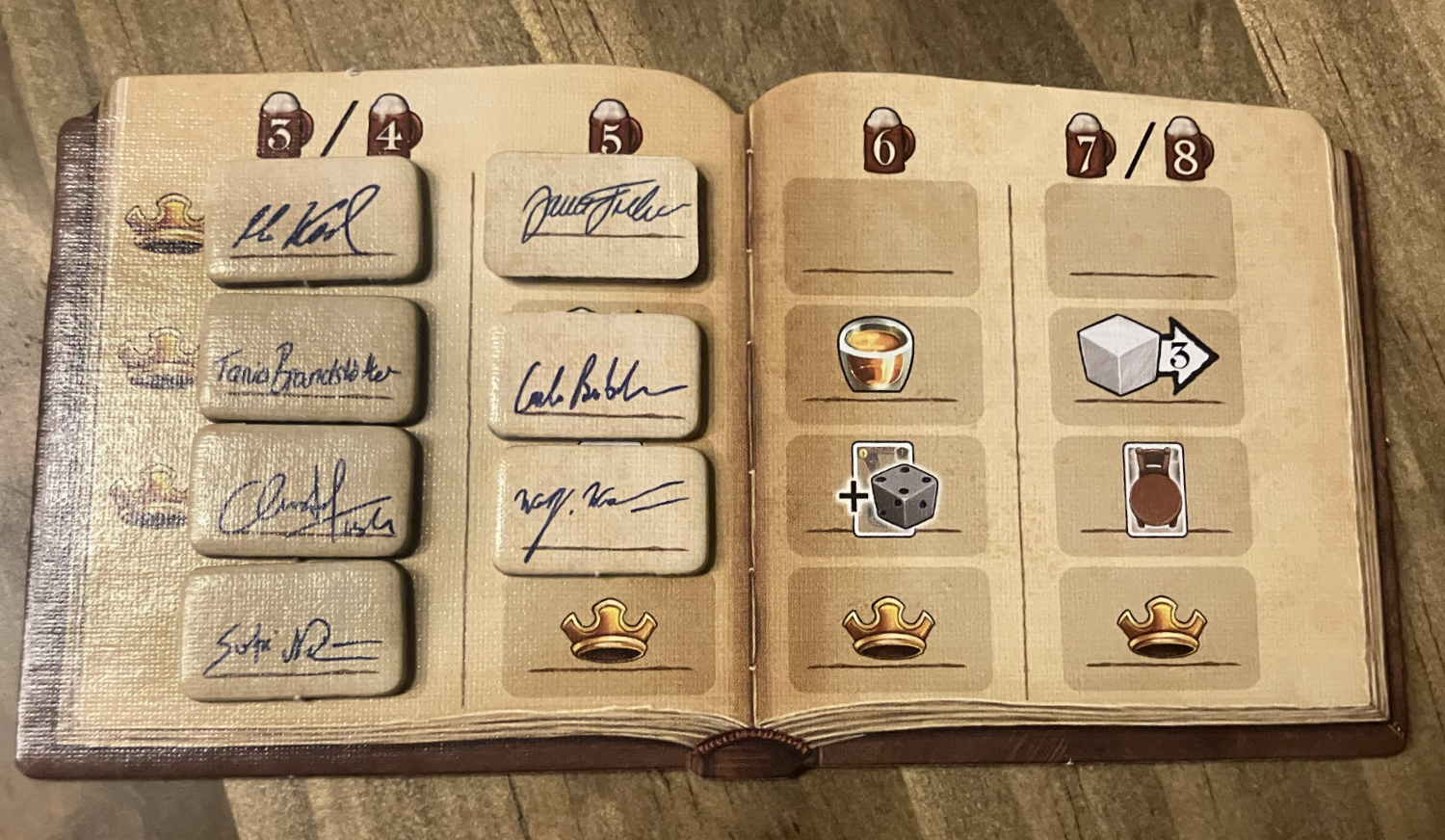
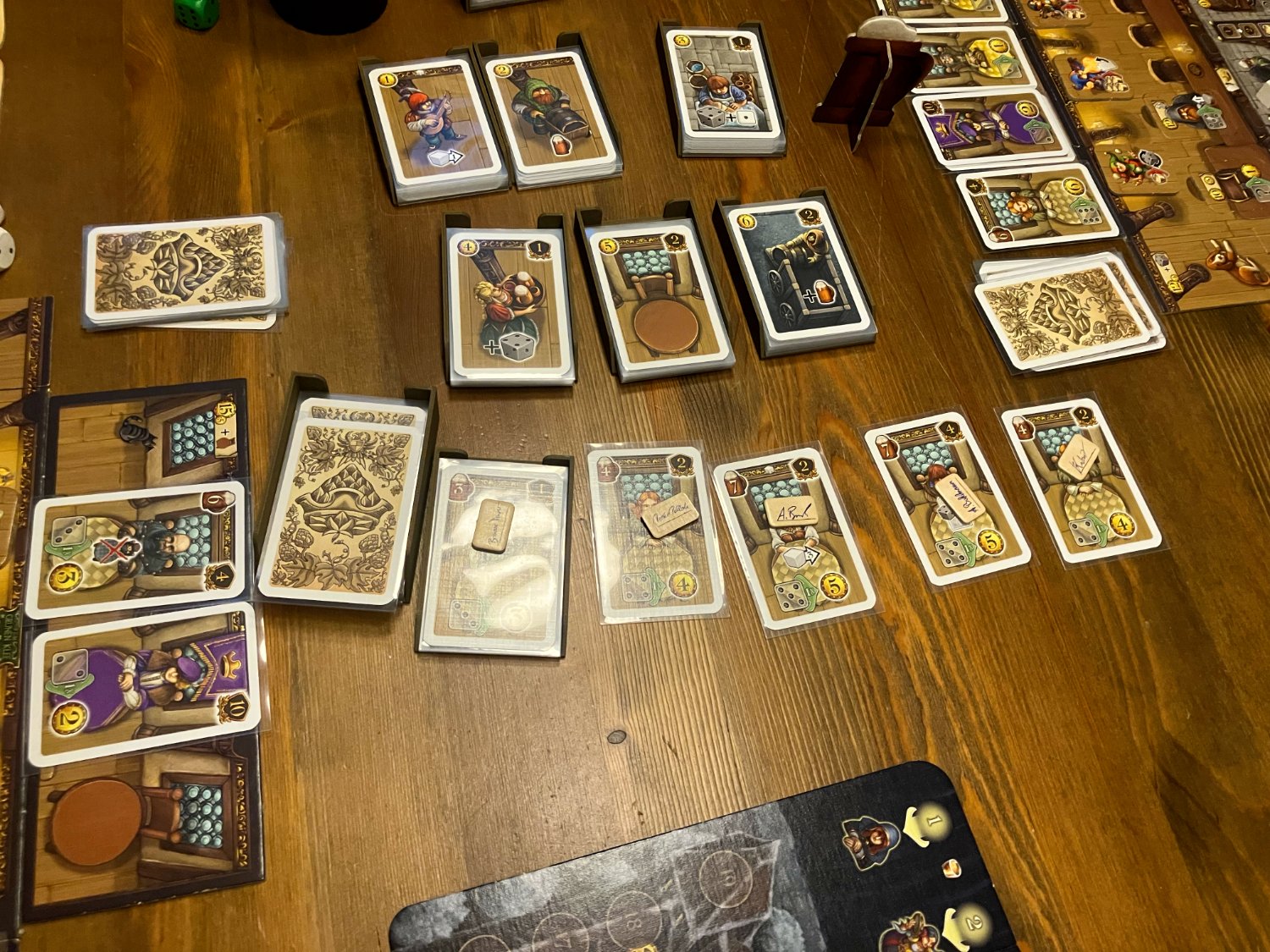
There’s a joke that a person who speaks two languages is bilingual, a person who speaks three languages is trilingual, and a person who speaks one language is an American. I am proud to say I break out of that stereotype, if even slightly, with my level of German but language skills really aren’t necessary for this game at all as everything is done with icons and artwork. Since I had my friend explain the game to me, I didn’t even have to read an instruction sheet but actually playing the game could be done by up to four people who speaking entirely different languages as long as they could also understand numbers when you’re counting and spending resources.
Like every euro-game I’ve played, the system looks more daunting than it actually is once the game cycle begins. Then it actually becomes pretty close to second nature to play your board when your turn comes.
Would I recommend? Absolutely! Like Viticulture, it’s a very relaxed game that doesn’t have a sabotage mechanic that slows down your opponents and, so, is very friendly. About the only thing an aggressive player could do is try to grab dice from the pool the people behind them might want but that’s so minor it never even came up. And, despite its setting in a tavern, I would classify it as extremely family friendly. Definitely worth a play through and we’re looking forward to trying one of the expansions the next time!