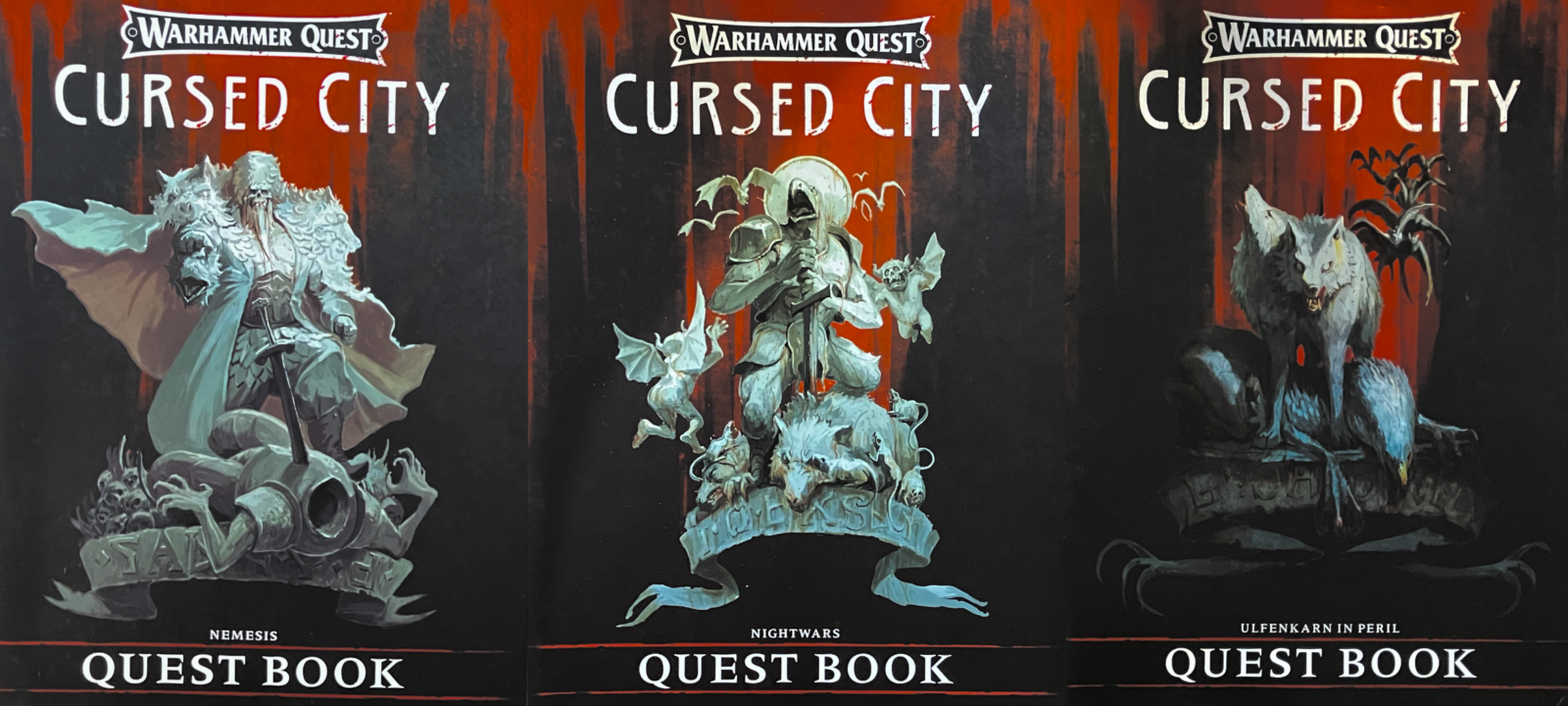
So Miniac, a YouTuber I sometimes watch while I’m on the elliptical in the morning, just announced that he’s going after his backlog and he’s starting with Warhammer Quest: Cursed City. But, don’t worry, says he, he’s never played the game but has a bunch of house rules set to play to make sure it’s fun….
As an avid player of Cursed City (and it being one of the few miniature games I can get my wife to play with me), I find it incredibly frustrating each time I hear someone, especially someone who admits to never having played the game, claim that Cursed City is “boring.” Boring? Compared to what? How is it boring?
The thing is, I know to what they’re referring. And it’s a problem that’s existed since the game came out. Look up reviews for Cursed City and they pop up as all the first results. And they all say the same thing. Cursed City drags. It’s repetitive. It’s a grind.
I’m well aware of these critiques because I remember reading them when my box arrived and then when I started painting up the box. But there’s a commonality among all of them that I feel like no one ever notices: no one ever played more than a handful of games. Usually, this handful of games consisted of exactly one of each adventure type.
And, yeah, if that’s your sum-total experience with Cursed City, I could see why you might declare it “boring.” But that’s also because you never got past the tutorial.
If I only ever played the character creation prologue to Fallout 3 and declared the game a slog, I’d obviously be missing out on a great game. I don’t see why people can’t see how this applies to Cursed City.
Adventure Types
In the core box for Cursed City (as in, excluding the expansions) there are three main types of adventure: Hunts, Scavenging, and Deliverance journeys. Hunt and Scavenge journeys each have eight pre-composed maps. Both of them have a goal of accomplishing a task ten times. For hunts, it’s to eliminate ten champions whereas for scavenges, it’s to search ten mysterious objects for loot. Deliverance journeys are on maps determined at random by a deck of cards where the characters have to issue eight warnings to the people of Ulfenkarn.
Sounds like a lot of repetition, right? Having to kill ten champions?
I mean, I guess… but if it does, I’m not sure why you’d be playing a dungeon crawler. Killing things is kind of the point isn’t it? And killing a large bat is definitely different than trying to take down Radukar. Which is why Radukar and the Vargskyr are worth two champions each. And by “different”, I truly mean different. Anyone who thinks it’s just the same dice rolling over and over and over again probably hasn’t read the NPC cards very closely because that’s where the differences between enemies lie.
Killing bats requires a roll of the d10. On a 9+, the bats flutter out of the way and reduce the potential damage you did to them. Whereas Radukar doesn’t just count as two champions, he acts like two champions, fully resolving two attacks each time he activates. Then, different bad guys can have different effects. Take damage from Radukar, become cursed. Get bitten by a rat, become diseased. These status effects then affect how well you deflect damage going forward. Spoiler alert: not very well…
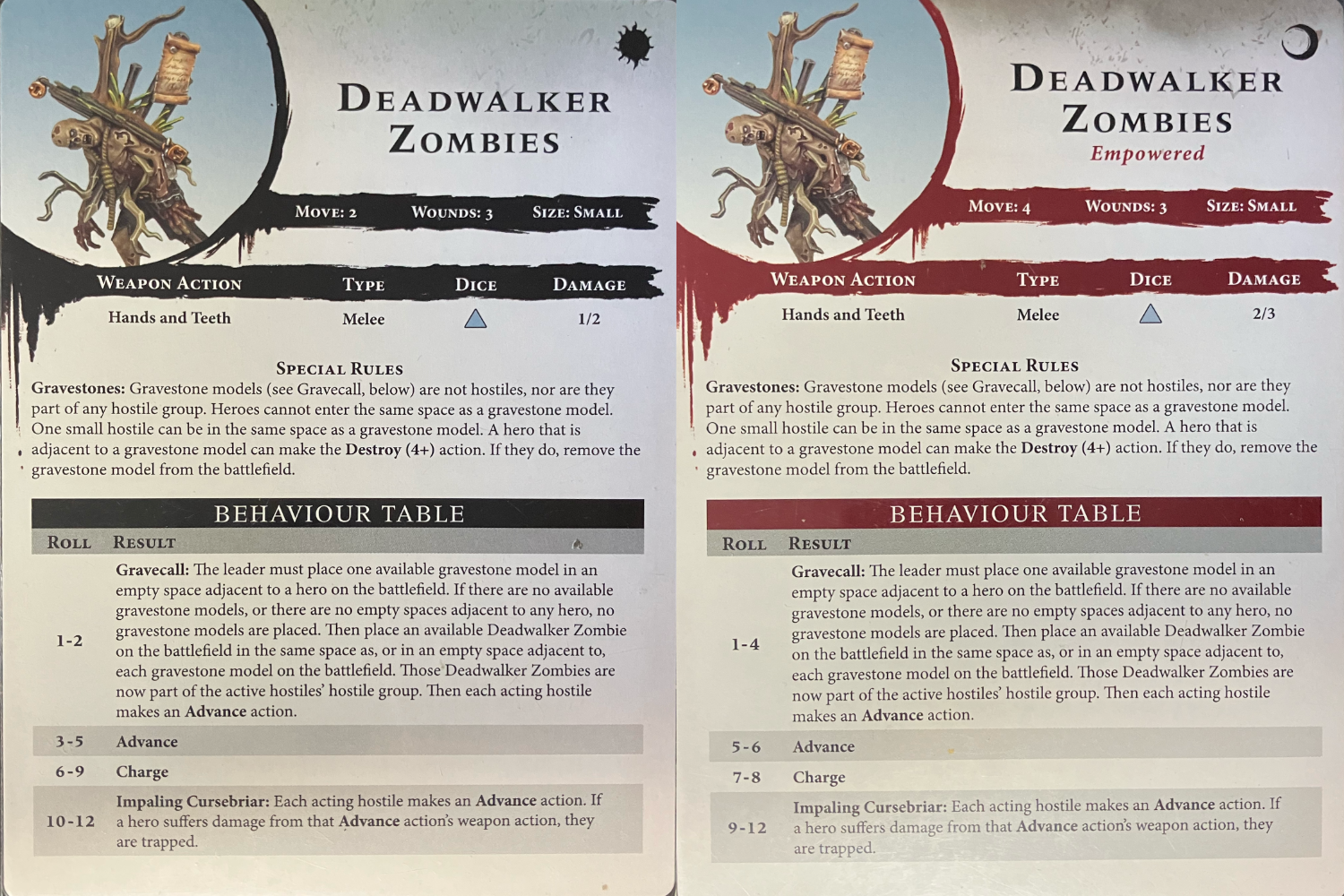
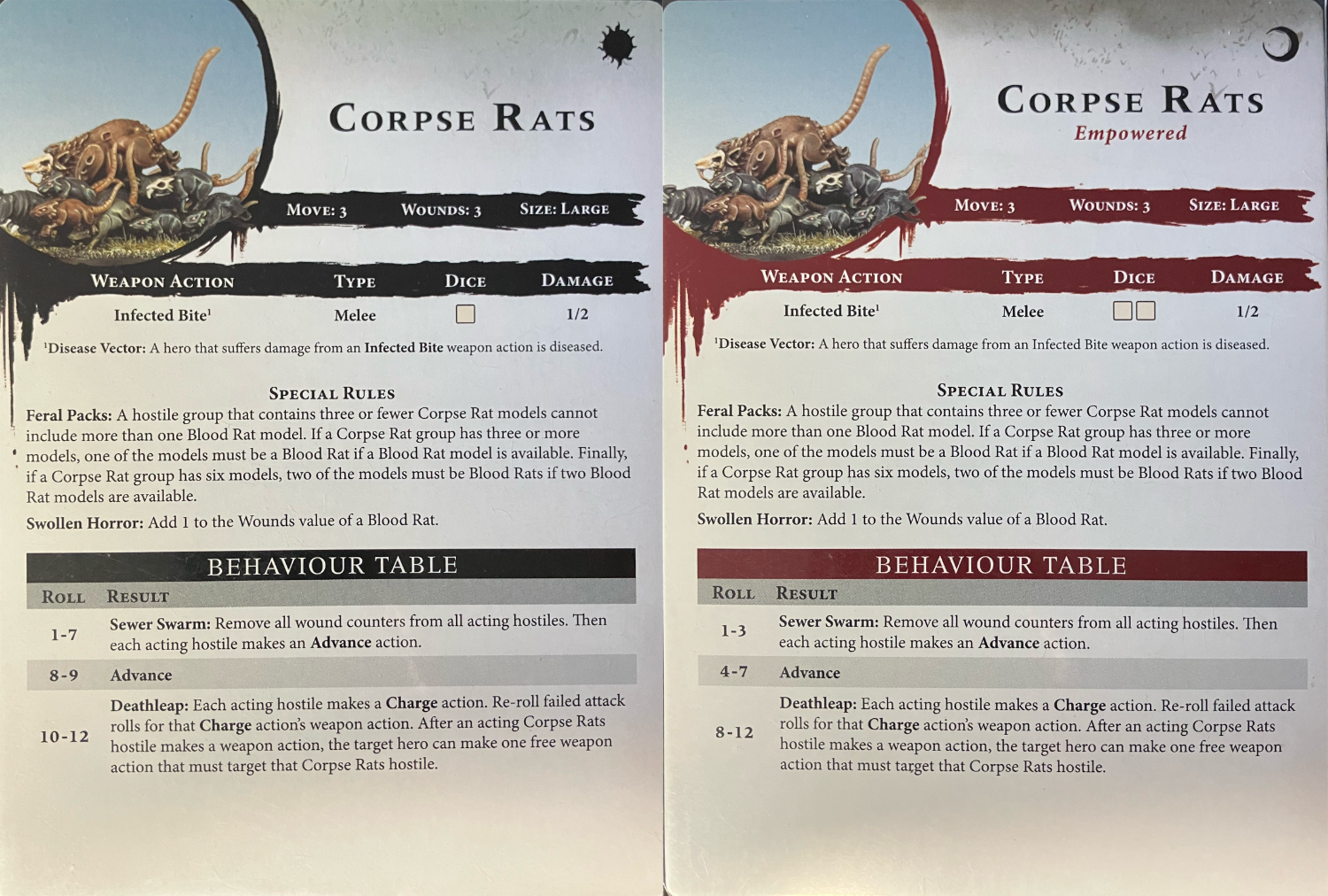
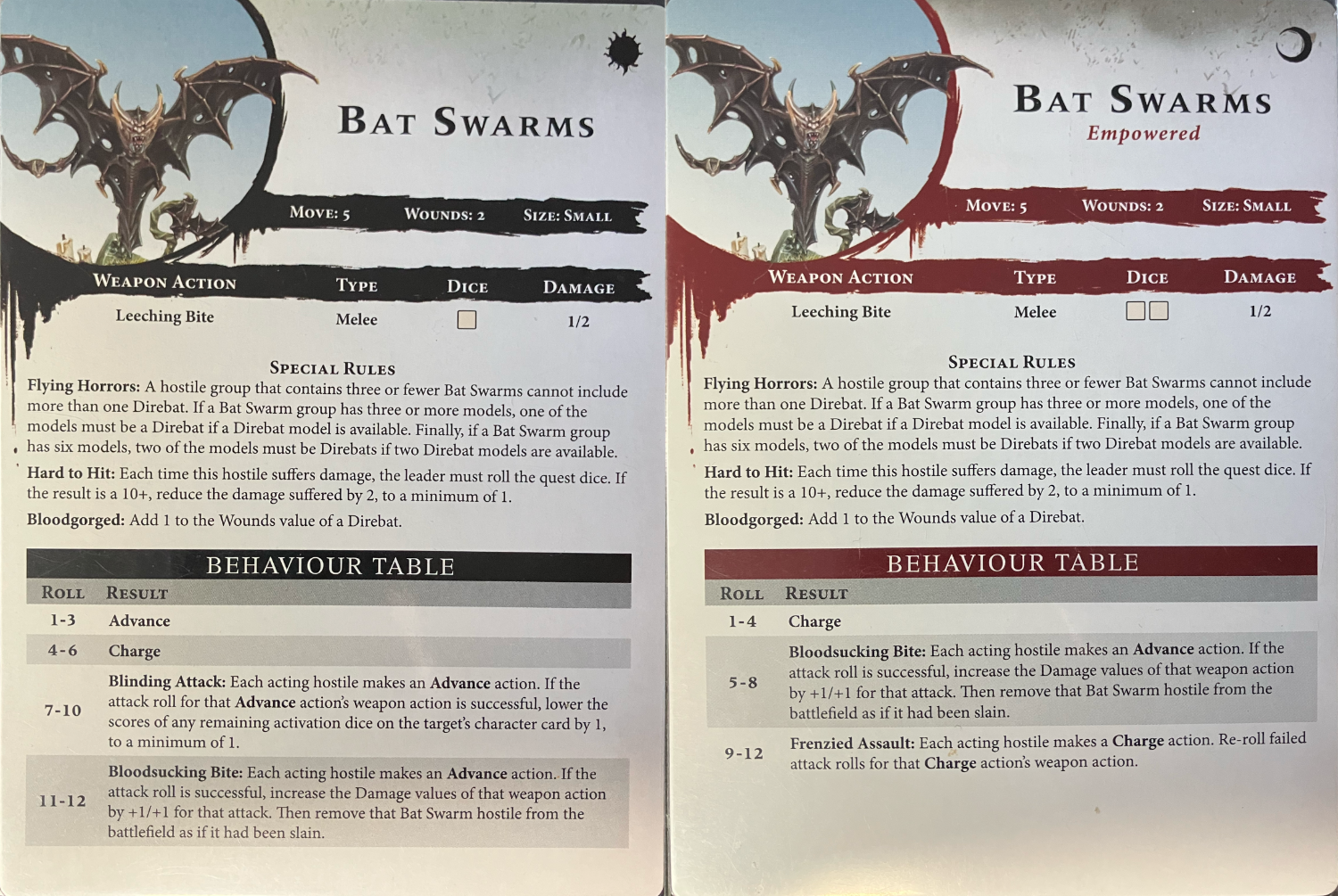
The same applies to Scavenge journeys even though you’re not setting out to kill champions. But you are chasing mysterious objects from room to room and, undoubtedly, running into bad guys along the way. But still, different bad guys play differently. And Sigmar forbid if you get trapped by multiple bad guys. Getting stuck in a room with a horde of zombies and a Vyrkos Blood-born or two can roll up a game pretty quickly. The best one can hope for is that they block one another from attacking you all at once.
So, yes, it’s a lot of hacking and slashing. But, again, dungeon crawler…
The last type is arguably the most dynamic, the Deliverance journeys, because their maps aren’t even in the book. Instead, you draw two map tile cards from the deck and piece them together. And you keep building the map this way until you achieve your goal. Meanwhile, you’ve got the Gravetide on your heels, looking to consume you, the tile, and everything else that might be standing around. If you’re not feeling pressure when playing these games, your heart isn’t beating because it takes a lot of luck to get more than a tile ahead of the Gravetide.
Where the first adventure of each type might be a little boring depends on the characters that were played with and definitely because they’re all at Level 0. Level 0 is the aforementioned tutorial level. The characters have no gear, no special abilities, no nothing. They have what’s on their cards and, in some cases, that’s really not much. Emelda Braskov, in particular, has one type of attack. And unless you’re Dagnai Holdenstock on a Scavenge journey or Brutogg Corpse-Eater, it’s pretty hard to inspire at Level 0 to gain your special ability.
But that’s not the purpose of playing at this level. The purpose is to teach players the mechanics of the game. Then the game begins to layer things on and it instantly becomes more interesting.
Character Advancement
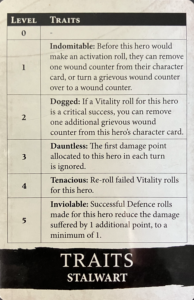
It’s easy to overlook the advancement cards the first couple of times the game is set up to play. After all, they’re completely unnecessary at Level 0. But, by the time a fighter makes it to Level 1, two things have happened: first, they’ve probably begun to acquire gear or power-ups and, two, they’ve now gotten their first skill.
The advancement cards aren’t unique per character. Instead, they bring advancement abilities to the fighters by their role. So all Executioners share one set of skills as do all Lore Keepers, etc. But the way they interact with each character is subtly different. And they magnify things that were already part of a fighter’s profile. For instance, Brutogg is without a doubt the most tanky character in the game. But once he starts leveling, he gets abilities like gaining back a wound at the start of every round or ignoring the first point of damage from a hit in a round. Suddenly, the guy that was leading the pack because he was strong is now a shield for the elf who can clear a room with her arrows but can’t absorb too many hits.
The acquisition of weapons here, too, makes a major difference. A sword that can never be ignored makes a massive difference when facing the Vyrkos Blood-born or Radukar, both of whom ignore wounds on a die roll. It becomes a strategic discussion among the players which piece of equipment will be bought next for exactly this reason. Yeah, getting Brutogg extra armor might be great but he heals every round. If Emelda can take 8 wounds off of a Vargskyr that can’t be ignored, well… we’re halfway to paradise then, aren’t we?
Enemies
The interesting thing about Cursed City is that it’s not just the fighters that level up. After all, that would get pretty boring if, after a while, you’re slicing through skeletons and vampires and just calling out Radukar by name. I mean, it would be pretty epic in story terms but kind of boring from a gameplay perspective.
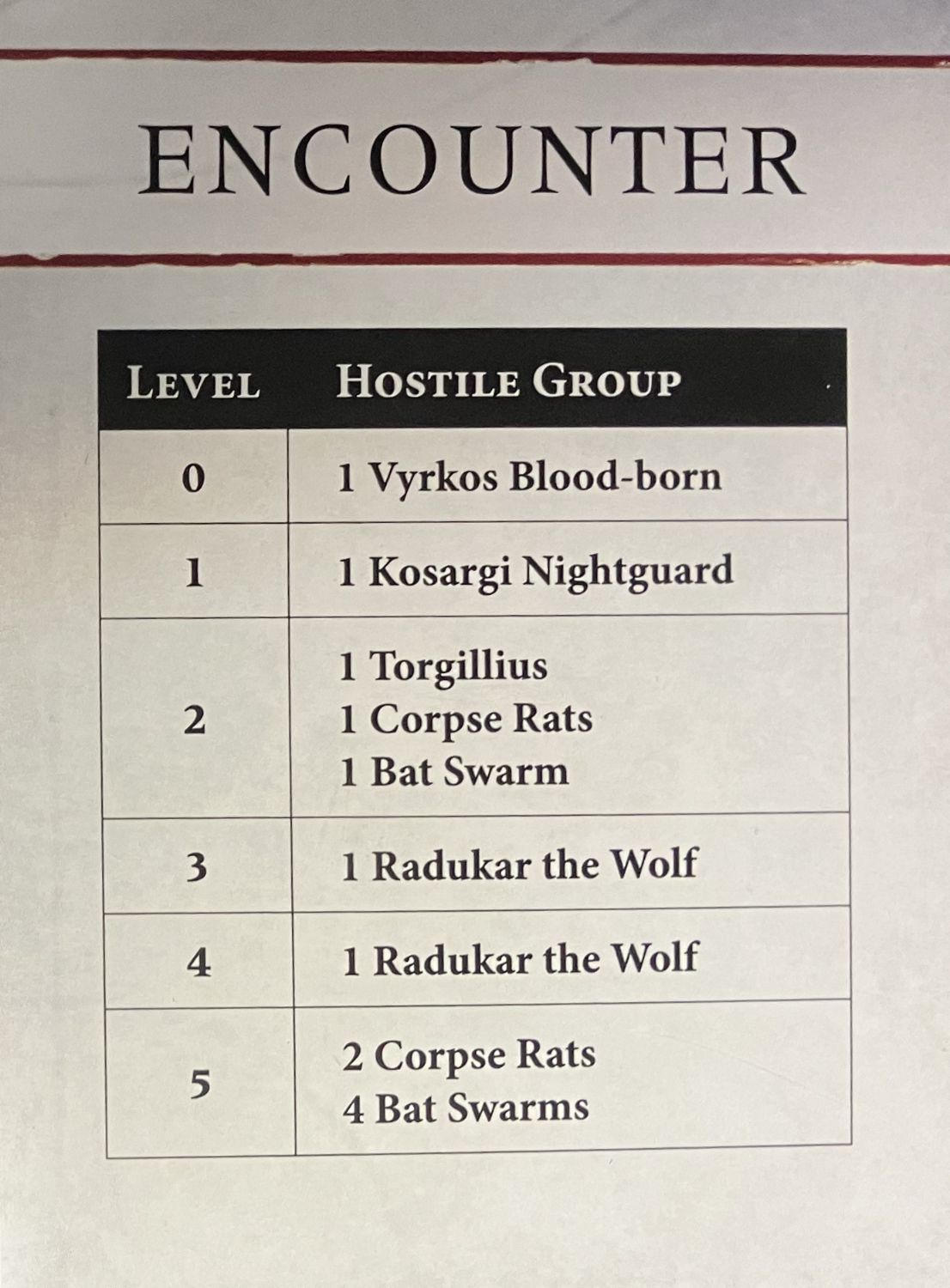
Fortunately, the encounters level up also. And not just when the entire party has leveled. As soon as any fighter has reached a level, the encounter card should be read at that level. And things can get out of hand pretty quickly. It doesn’t take very long before all ten of the Ulfenwatch are on the table and almost the same number of zombies are stumbling around behind them. And it’s not like you’re getting more guys. The Cursed City adventuring party is always limited to four characters at a time.
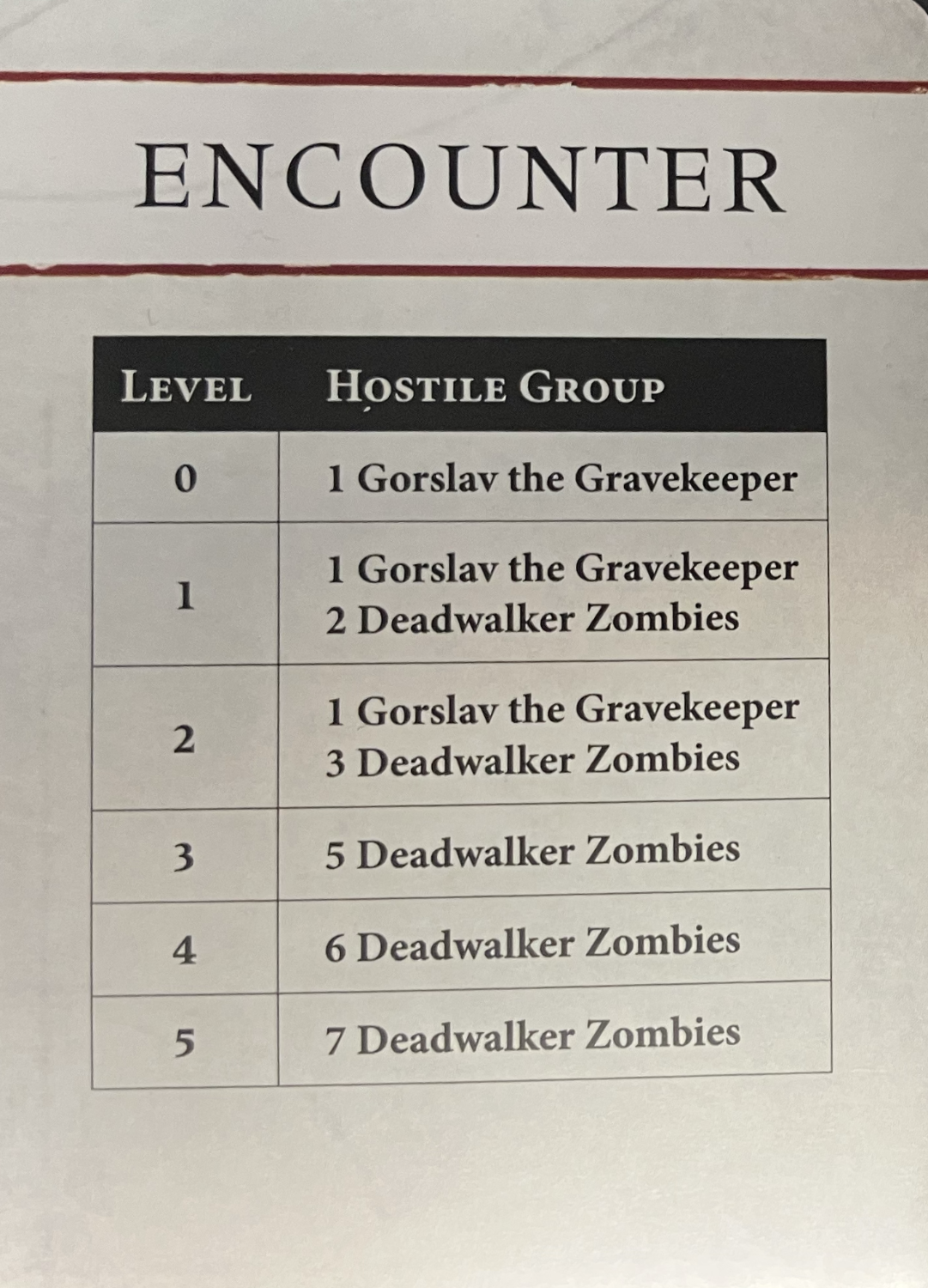
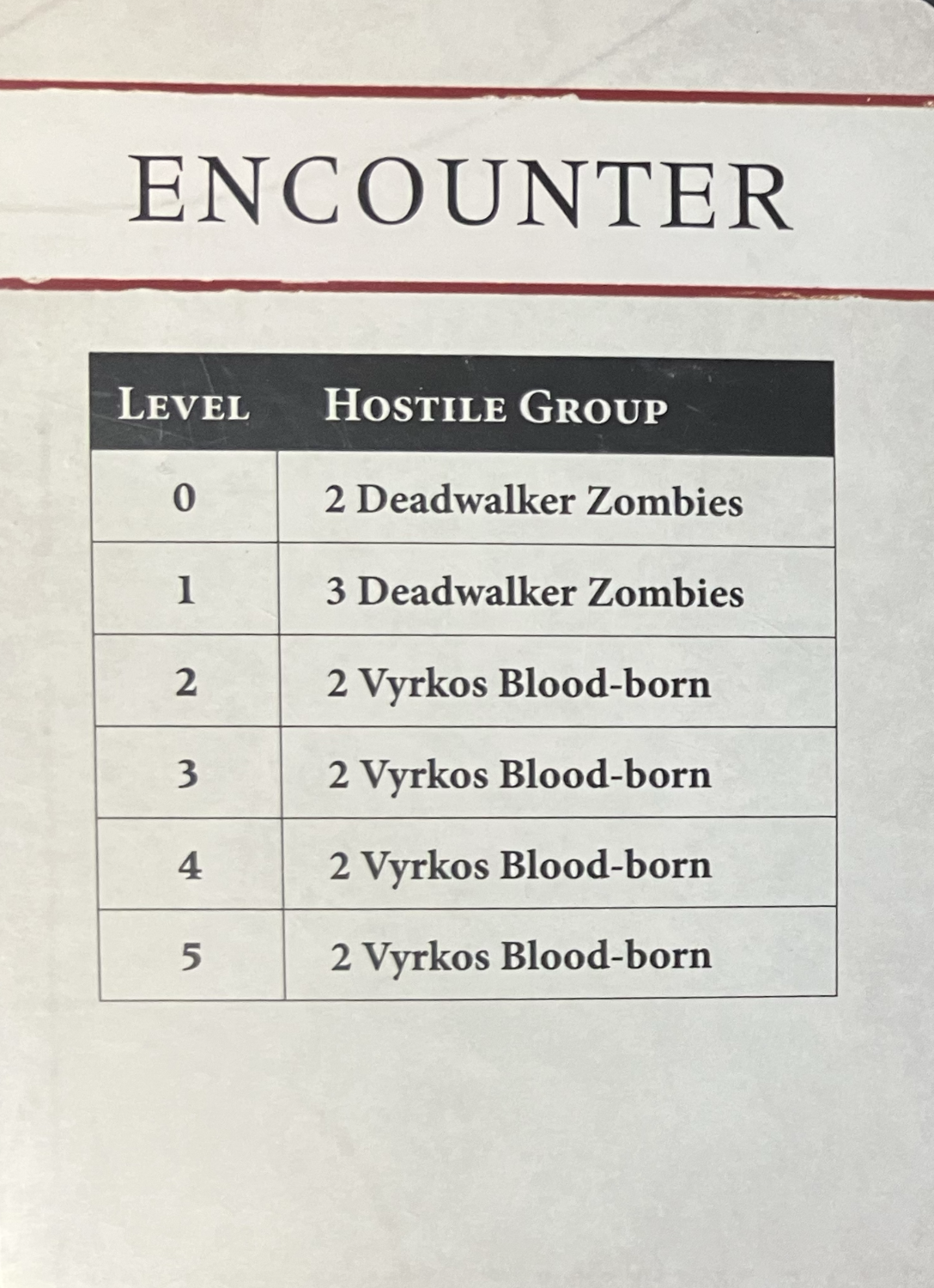
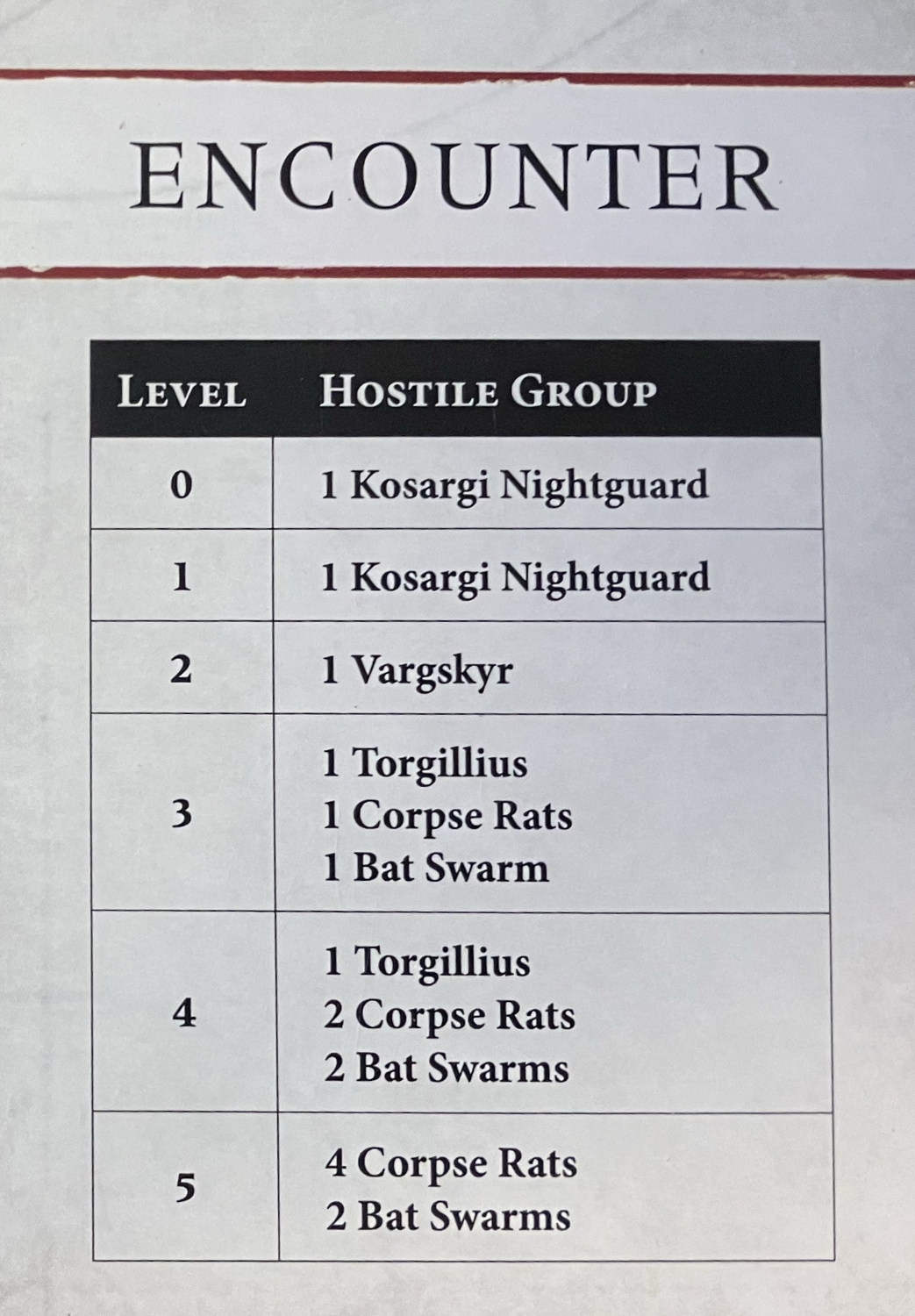
With baddies like the Ulfenwatch in particular, they have specific characters within their ranks that can bring extra abilities. For instance, you really don’t want to be facing the full 10 Ulfenwatch with a standard bearer as the standard bearer grants a re-roll on failed attacks to any Ulfenwatch who can see him. Even a tank like Brutogg can be taken down if surrounded by bad guys like that.
Enemies are also interesting because of the way Initiative is handled in Cursed City. Apparently this is a tweak of the Initiative system from Blackstone Fortress which I came back too late to play but I think it’s really interesting in that you never know in what order things might resolve.
Basically, every encounter group is assigned a number and every hero a sigil. There is a deck of cards representing each number and sigil that is shuffled up and dealt out under the Initiative track. Enemies and heroes then activate in the order of the cards from left to right. Naturally, there are a couple of skills and abilities that allow players to tweak this order but those are the exceptions to the rules. Otherwise, the random order is used and it can have interesting effects when a much more powerful group gets to activate before you do.
And we haven’t even gotten into the biggest power-up of them all and the heart of the Cursed City enemy mechanics…
Night
Every journey in Cursed City is a race against time. It’s about ten turns of play (although this can be extended or shortened through events and crises) until day becomes night in Ulfenkarn and then all of the undead become that much better. Zombies go from a movement of 2 to 4. Which means if their behavior roll is a Charge, they’re moving across whole board tiles. The enemies you were sure you could stay ahead of suddenly are right behind you.
A lot of times an enemy will have three or four behavior actions with one that is unlikely during the day but pretty devastating. At night, these actions become even more likely.
My favorite example of this are the Korsargi Nightguard. During the day they can make a Lumbering Charge, a double move and then attack that allows them to position themselves near as many heroes as possible while ignoring the rule that moving adjacent to one means they must stop. Then they can make one attack on each adjacent hero. This is a really quick way to have half your party taken out of action. But they can only do this on a roll of a 10-12. However, at night, they can do this on a roll of 8-12, making them much, much more dangerous!
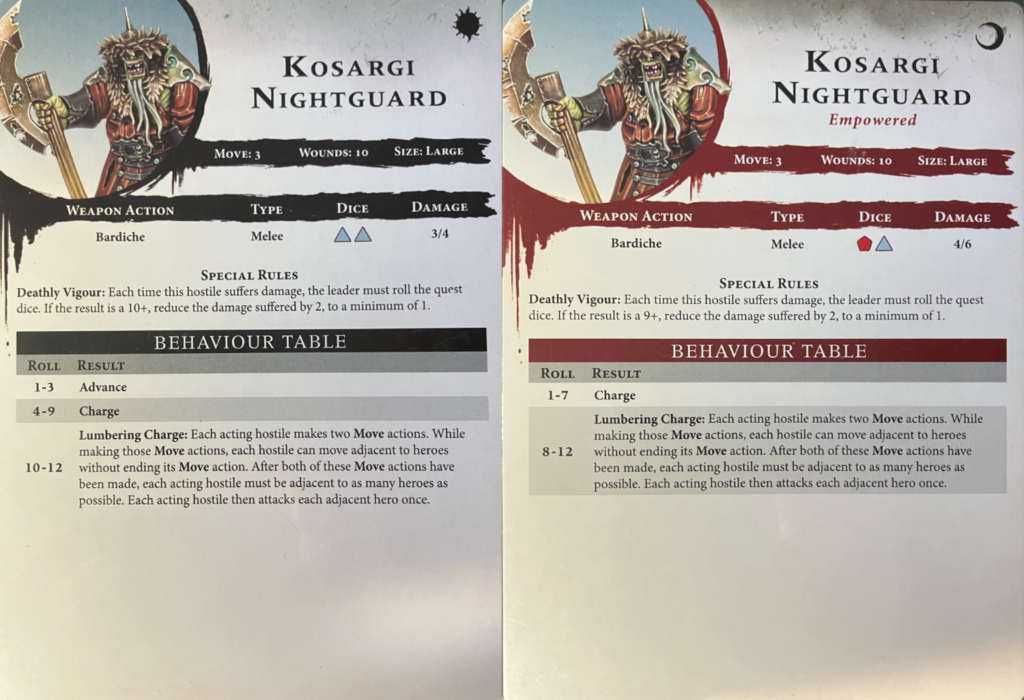
Night is never a good time for the living in Cursed City. Some enemies gain movement, some gain wounds, some are much more likely to hit you with truly devastating attacks, some just get to re-roll failed attacks, which is bad enough! It’s a really interesting mechanic that provides a real feeling of pressure on players to not wait around. Yes, there are turns where you could potentially all just stand around and attempt to recover wounds. But that’s one turn closer to night. And maybe two if the event roll at the end of the turn doesn’t go your way. That can be a big cost to pay.
Bespoke Maps
I’ve seen a lot of criticism about the way encounters work and the generic look of a lot of maps. Could they have done themed maps that only included rats and bats? Possibly, but then they would have had to include more rats and bats into the box. Or, worse, in most gamers’ minds, forced people to buy additional boxes of miniatures. And if they did include more, would there be less of something else? Also, filtering the encounter cards for specific encounters would mean additional setup time before each game. Again, something that could be worth it but wasn’t in the base game.
But there is one set of maps that can’t be complained about because these are exactly what have been asked for: Decapitation maps. Every Decapitation journey, a mission that takes out one of the main game champions, always finishes on a map designed specifically for that mission. And the encounter groups are pre-determined.
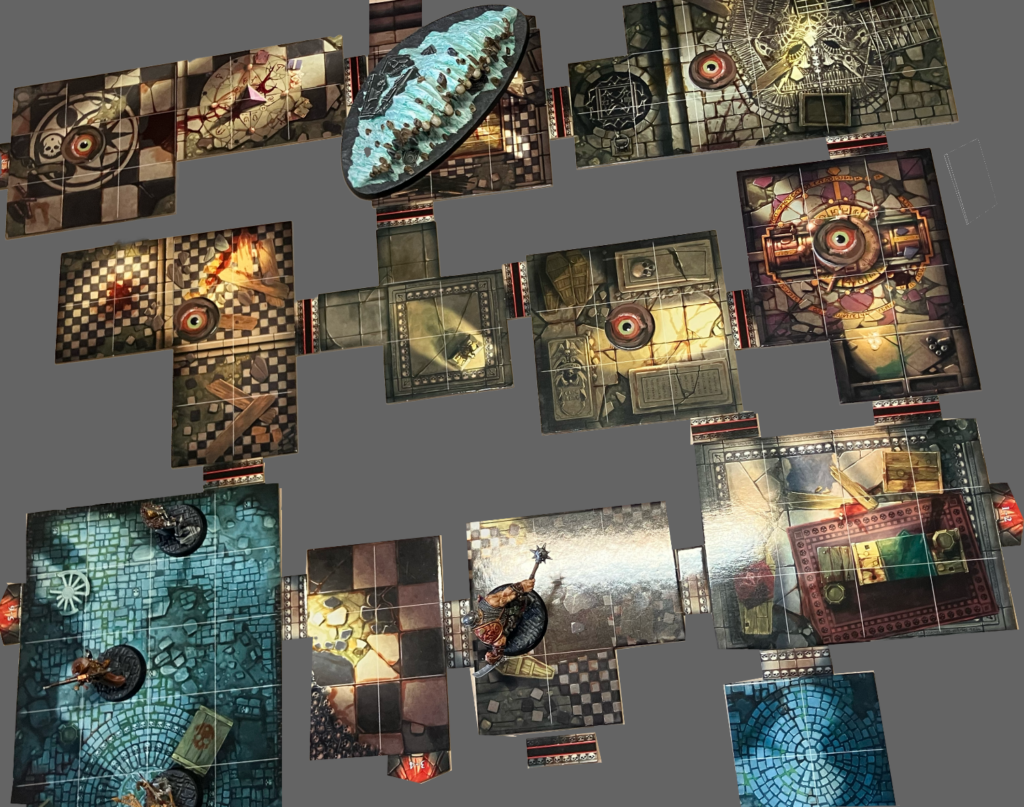
I won’t lie. These are the most fun games of Cursed City. But that’s because there’s often a balance between replay-ability and bespoke content. A game can have lovingly designed maps and adventures but then they’re pretty specific and since their parameters don’t change, there’s the possibility that playing it again just won’t recapture the magic. Then there’s the other side, the absolutely generic mixing and matching of various parameters that can create thousands of options but are rarely satisfying. Cursed City operates somewhere in the middle.
Every type of journey has a set of maps to use with those journeys even if the encounters are random. This makes sense because these are the bulk of the game, tromping through maps, killing baddies and collecting treasure. But then there are the Decapitation missions that are very specific and rewarding in the way that extremely well thought out things are. Everyone who is “bored” by a Hunt or Scavenge journey should give themselves a few power-ups and try an early Decapitation mission and see how boring they still find things.
House Rules I Play By
There are some aspects to it that my wife and I house-ruled just to make things flow a little bit better.
But why do this? If Cursed City is so good, why not just play it as is?
I never said it was a perfect game. And sometimes a game can be made a little bit better or a little more fun with a few house tweaks. The difference here, and this is the important part, is that we’ve played it enough to make it through the core campaign so we actually know why we’re making these house rules. It’s not because some reviewer said the game was boring and then we found rules online by someone who said they would make the game “un-boring.” So here’s a handful of things we adopted.
Experience
Strictly speaking, there is a level cap until you’ve taken out the next minion. You can earn up to a level but no further. This means a bunch more games need to be played to reach the next level at which you can play a Decapitation mission. We shortcut that by still earning the silver or gold pip that represents experience but not quite making it to the next level until we’ve broken the level cap. So if the level cap is 3, and we haven’t yet defeated the minion, we allow the earning of the silver and then gold pips. But if the minion remains undefeated when we would advance to level 4, we pause there until the minion dies.
Enemy Spawning
This was actually made official in the Nightwars expansion where new gates were provided that had 1-2, 3-4, 5-6, etc printed on them. Prior to this, we numbered them in our heads and, when a new encounter group spawned, we placed them at the gate whose number we rolled. Rules as written, encounter groups are supposed to spawn at the furthest gate from the heroes but we liked the way reinforcements worked in the Decapitation missions and decided to use a variation of those rules instead to make encounters a little more exciting.
Always Allow Defence
Regardless of where the damage might come from, an enemy attack, or a story element in a Crisis, we always allowed our heroes to make a save against the damage using the same Defence rules as in battle. We still didn’t save that often but it at least allowed us to try one last thing before putting wound markers on our cards.
One Destiny Dice Re-roll
Once per journey, if we had a shit Destiny Dice roll, as in they were all the same value so we wound up with none, we allowed ourselves one re-roll. This was to prevent too much frustration on those evenings when the dice just seemed to be against us. Every player of GW games knows what I’m talking about here…
And that’s pretty much it. With just some simple changes like this, we made it all the way through the Ulfenkarn in Peril quest and had quite a good time doing it too!
Expansions
There have been two expansions that were released long after the prevailing narrative of the game as “boring” came into effect: Nightwars and Nemesis. My wife and I are currently working our way through Nightwars and, honestly, I find it a lot of fun! It’s also incredibly stressful because all the games take place at night so all of the enemies are powered up.
I forget exactly what I paid but to get all the minis I needed to complete the expansions, I think I paid north of €230. And this was several years ago.
The biggest downside to these expansions doesn’t seem to be the games themselves. In fact, Nightwars has only improved the game in several ways. Instead, because GW seemed to lose confidence in Cursed City after the launch debacle and whatever happened after that, the miniatures that were supposed to be part of the expansions had to be purchased separately. For regular players of Games Workshop games, this isn’t the world’s biggest deal but there is a reason they put out Spearhead and Combat Patrol boxes. Compared to buying things individually, there is a slight discount. That same thing is usually expected for an expansion for a game like this.
But the minis were separate. Which meant they were more expensive. I forget exactly what I paid but to get all the minis I needed to complete the expansions, I think I paid north of €230. And this was several years ago. It was not an insubstantial addition of miniatures and I can see why this may have prevented a lot of people from continuing with the game. That said, so far, I’ve found it to be worth it, both in hobby time spent painting the minis and in the playing time with my wife.
Wrapping Up!
Look, as I said in my House Rules section, Cursed City is not a perfect game. But it is pretty fucking far from the boring reputation it’s acquired! There is a lot more variation in setups and gameplay than I think most people give it credit for. And, if you’re still not convinced, then the last thing I have to argue is that most of the system used in this game was originated in Blackstone Fortress, a game no one has described as boring. So why is that one beloved and this one trashed?
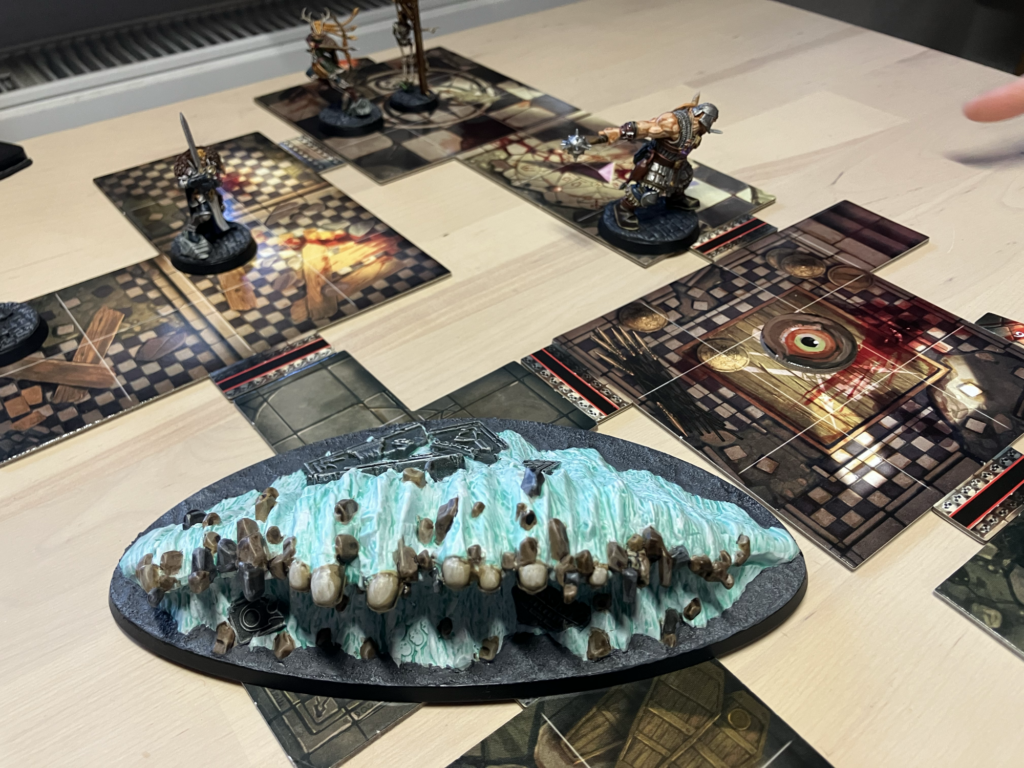
My honest opinion is that too many reviewers stopped after playing the demo levels. And then those reviews just became canon. No one I’ve actually sat down and played the game with holds those opinions about Cursed City. And that’s because it’s not boring!
Lastly, I just would like to add that since getting back into the hobby, I’ve done everything I can to try and get my wife into it with me. A large part of this stems from the fact that I honestly like her and like spending time with her. So I’d like to combine two of my favorite things. But she’s not interested in sports, so Blood Bowl is out, and she doesn’t like competing against me, so Necromunda doesn’t have a lot of appeal. But a game where we work together, as the good guys, to rid a fallen city of evil is actually something she likes as a concept.
Having played through the core campaign and then, now, into the Nightwars expansion, I have to say we’ve probably put dozens of hours into it. And, after every session, we always promise to play it more often as it’s a nice way to spend an afternoon or evening. And, if it wasn’t kind of a long setup time to play every game, we probably would play it a lot more often. But the arduousness of setup and the thrill of gameplay are two separate things that shouldn’t be conflated.
I, for one, think Cursed City isn’t boring. I think it’s a damn good game.