This review will be commenting on the premise and setup of the book The Mercy of Gods but will not discuss plot elements past the first couple of chapters. If you can read it while standing over a display table at an airport bookstore when deciding whether to buy the book, it’s fair game. But detailed plots and twists are reserved for your own discovery and enjoyment. Read on, unafraid.
Anyone who hasn’t watched or read the books of The Expanse series either hates nice things or, hopefully, didn’t know they existed. The TV show flew a little under the radar, unfortunately, and the books lived on the sci-fi shelf where, also unfortunately, a lot of good stories go to die.
It’s safe to say that if someone didn’t push you towards them, it’s possible you never heard of them or never tried them. But you should. Because they’re good.
But, whereas the Expanse takes place in a relatively near timeline to our own, maybe as few as two hundred years from now, James SA Corey’s new series The Captive’s War, takes place in a time much more distant. So distant that the planet on which the story opens is called Anjiin and no one really knows how humans got there.
So… pretty fucking distant.
It’s also a much different story than the Expanse. Where the Expanse was concerned with solar politics, the core of the first book, The Mercy of Gods, really focuses around a group of researchers who find themselves swept up into events far, far beyond their control. But there is a bit of the same pattern in this book you can see in Leviathan Wakes or Game of Thrones or Fellowship of the Ring. It starts small and then lets the world and the story unfold.
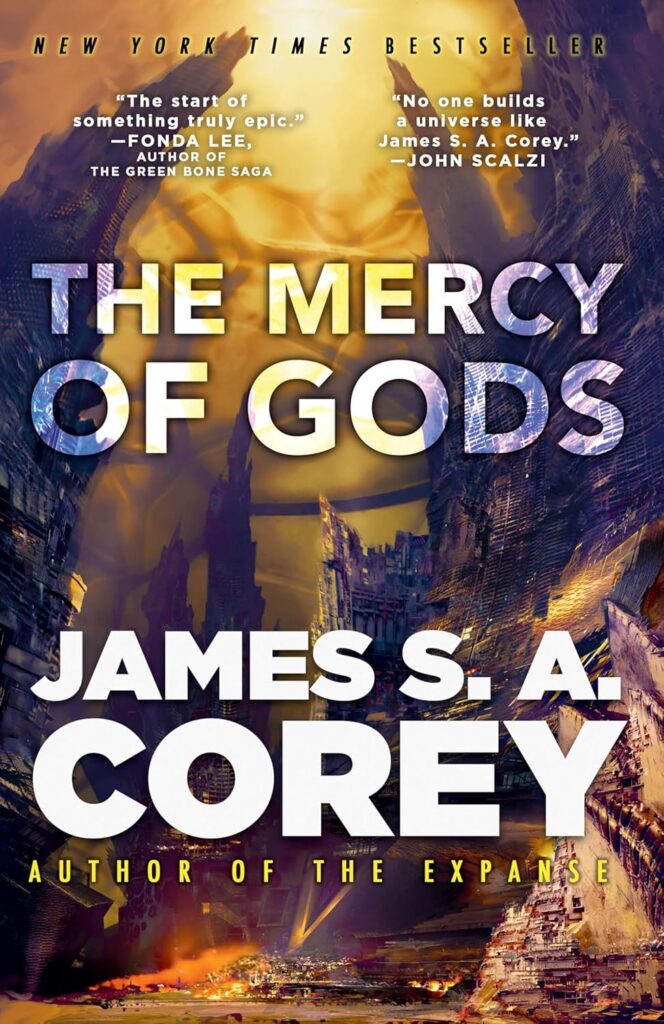
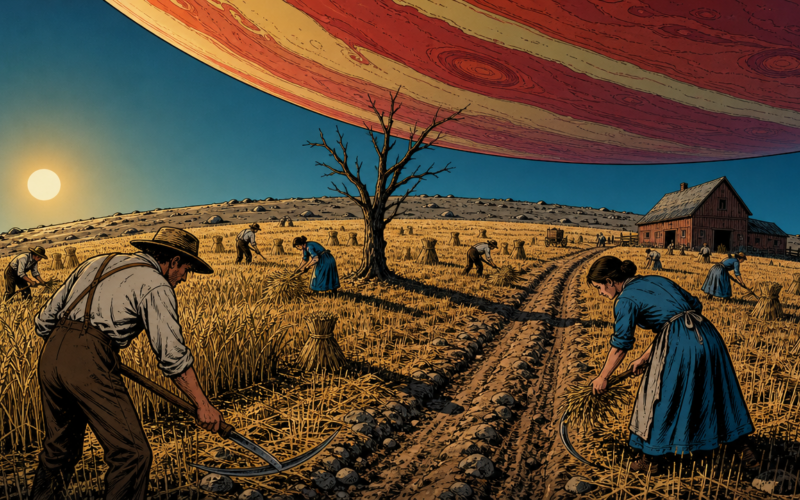
The Mercy of Gods opens on a planet settled by humans a long time ago. But the world already had a tree of life that had evolved on it. The humans and associated flora and fauna came later and operated as a parallel tree that sometimes competed but didn’t seem to directly interact. The main characters are a team of researchers who have made a promising start at merging these two trees, to what end… is unclear.
…the end of the world actually comes in the form of an alien invasion.
At first, the biggest drama they seem to have to deal with is that people are jealous of the funding and attention they’re getting and so a backroom cabal of university researchers has conspired to split up the team (and their funding) so that everyone can have a piece. Which seems like the end of the world.
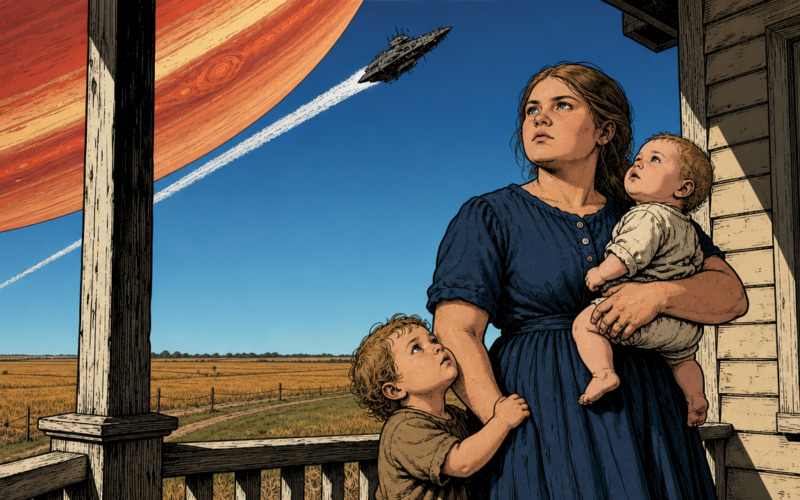
Until the end of the world actually comes in the form of an alien invasion.
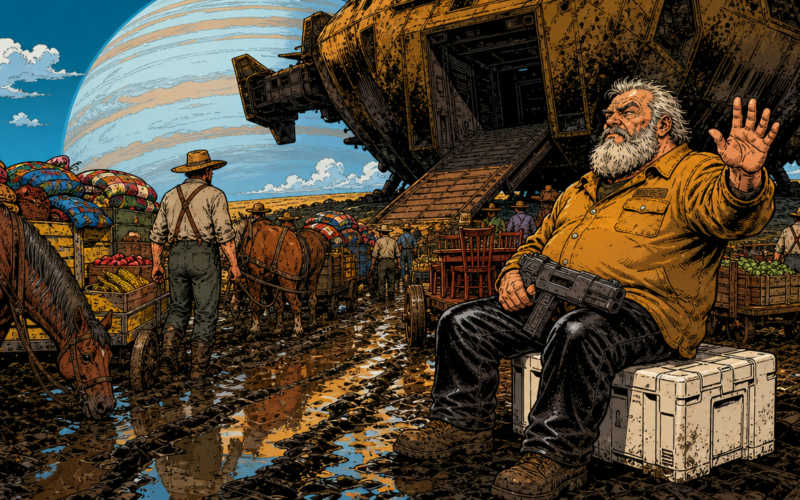
They divide the world up into eighths and eliminate one-eighth right off, in the hopes of reducing any kind of resistance. Not that the humans were capable of much resistance to what was attacking them anyway: a kind of slaver species that calls themselves the Carryx. (Carry-rix? Car-rix? Carry-x?)
Pretty soon, the humans have been divided up and, those deemed worth the effort, are snatched up, sent into orbit, loaded into transports and sent back, presumably to the Carryx’s homeworld. And this is pretty much in the first hundred pages.
The rest of the book centers around the research team, their various personalities, one of whom may not be as they seem, and their interaction with the other species the Carryx have conquered and made to prove their usefulness.
All in all, it’s a fun science-fiction adventure, if horrifying at times, and occasionally lazy at others.
The writers who comprise “James SA Corey” have a real talent for taking a mundane sentence, simple words, and saying some absolutely nightmarish things.
Daiir Ferria, conductor of the Abbasat symphony and popular educator on all things musical, had died at Tonner’s feet. He’d grown up watching her documentaries for children. When he thought about her, he could still see the gape of her mouth as she struggled to breathe.
Read that again but think about Carl Sagan or even Neil deGrasse Tyson, someone whom you’ve always known from television, slowly fading into death at your feet. It’s horrifying.
On the other side, while trying to be generous in knowing a lot of people would compare the new and weird to the old and familiar, the authors fall back sometimes too much on simile instead of trying to really describe something alien. For example:
A pair of large beasts the size of horses but with bone-colored exoskeletons ambled by, their joints making little green flashes like static.
Half a dozen of the amber-eyed monkey-like things that kept invading the laboratory bounded past, saw him, screeched, and ran away.
It’s not bad. It’s just… by the fifth or eighth thing where, instead of stretching their legs and trying to describe something it’s like “they’re jellyfish but they float in the air” or “they’re extra jumbo shrimp but with a bad attitude” I, as the reader, begin playing the game too. It’s like a writer who can’t think of an alien but needs a lot of them!
Still, the plot of the first book is definitely interesting and definitely enough to make you want to read the new one that just came out The Faith of Beasts, which is exactly what I’m doing next since The Mercy of Gods leaves the reader at a nice turning point, not just for the main characters but for, possibly, humanity itself.
Definitely a recommendation for people who really like harder science-fiction.