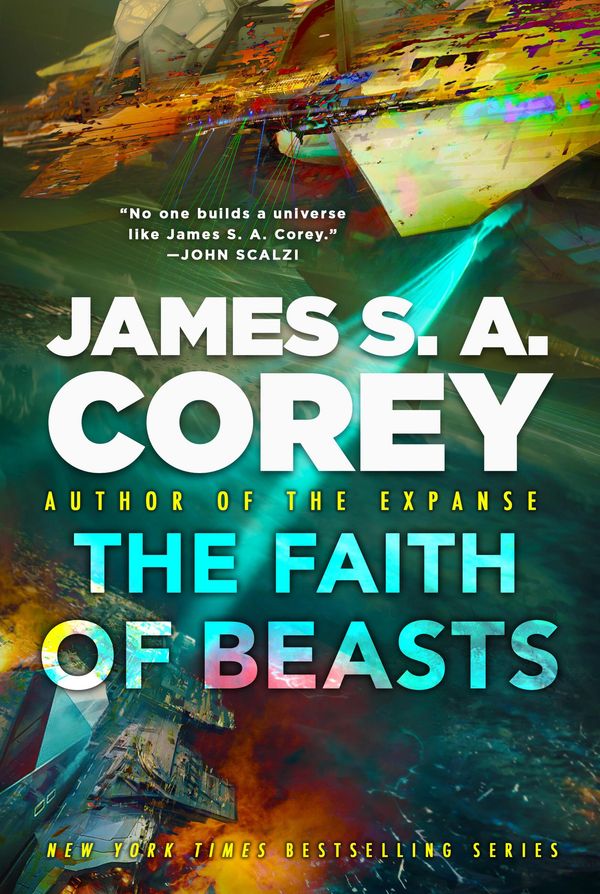
This review will be commenting on the premise and setup of the book The Faith of Beasts but will not discuss plot elements past the first couple of chapters. If you can read it while standing over a display table at an airport bookstore when deciding whether to buy the book, it’s fair game. But detailed plots and twists are reserved for your own discovery and enjoyment. Read on, unafraid.
My last review of the first book within the Captive’s War series The Mercy of Gods wasn’t without some criticism, not because it wasn’t thoroughly enjoyable as a story but because the two authors who write as James S.A. Corey, had done such a good job fleshing out the world of the Expanse that The Mercy of Gods seemed oddly flat by comparison.
As the Faith of Beasts is the followup effort in the new series, it can’t escape some of the same criticism but it can recontextualize it in a way that has taken something that I initially found lazy to actually be somewhat profound once I realized what was happening. It’s entirely possible other readers got there before me so, mea culpa, I may just be a dumb-dumb who didn’t understand what they were attempting the first time around.
The book picks up almost exactly where the last one left off, Dafyd, the nominal main character from the last book is now the Carryx appointed leader of the human “moiety”, the humans taken from Anjiin and deposited on the Carryx World-Palace. He finds himself split between trying to undermine his alien overlords while, at the same time, keeping the working groups… working so as to prove useful enough they won’t all just be culled. It’s an obviously taxing high-wire balancing act that has been taking its toll on him but, as he expresses several times throughout, he has to do it as anyone else would just get them all murdered.
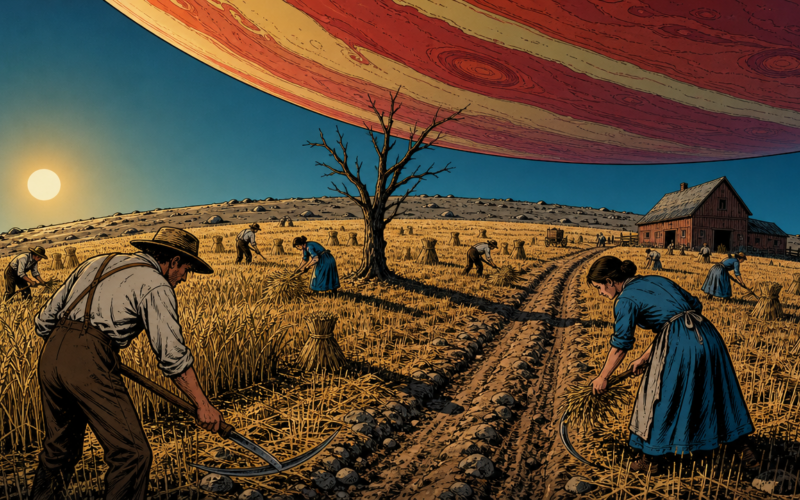
The rest of his team that survived the first book is mostly dispersed throughout the front-lines of the war against the “Deathless”, the enemy against which the Carryx fight… this time. Rickar and Campar find themselves on a ship in the thick of it while Jessyn is sent to survey a world that the Carryx recently conquered. And by “conquered”, the story strongly implies “slaughtered” as cities stand but no one is in them, fields have been planted but no one is left to work them. The most obvious question for her becomes, is that what happened to everyone else on Anjiin that didn’t make it to the world-palace?
[…] by “conquered”, the story strongly implies “slaughtered”
It’s a fascinating read because the story is both galaxy spanning and strangely small at the same time. After all, what do you call a story where one thread is literally attempting to navigate the manners and politics of a multi-star spanning empire and another where a major plot point early on is that of a pear? Just an ordinary, everyday pear.
The plot of the series is also working at a much different pace than those who read the Expanse will be used to. So far, each book has achieved something and something important to the story being told but when compared to the events on Eros in Leviathan Wakes or the intra-system politicking in Caliban’s War ending with the creation of the proto-molecule superstructure, the discovery of how to synthesize sugar so a “not-turtle” could eat food from a different environment starts to seem like small potatoes. Each book definitely takes a step forward and the events at the end of The Faith of Beasts have advanced things considerably, or certainly feels like it has, even if the information the reader is left with feels kind of underwhelming.
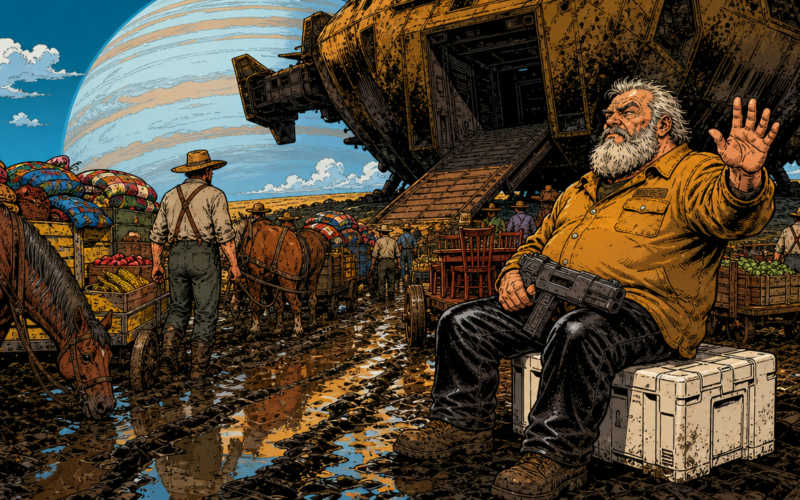
Where my mea culpa plays in is that I finally realized what the authors were doing: when they were describing something as a “a goat faced tentacled thing”, that’s not the authors being lazy or uncreative with their descriptions. That’s the authors writing as the character might see it, within what little context they have. Our characters aren’t Starfleet captains that have been everywhere and seen it all. In most ways, they’re provincials who only have a very limited context in which to compare things.
It doesn’t fully ameliorate the issue for me as this is a world with aliens and, as such, I am interested in what all the various kinds of life might be like. But, once I had the revelation of what was happening, it bothered me far less than it did in the original book. And, I’m happy to say, this book did two things the last did not: it gave us an actual alien character that I found both charming and interesting and it gave us an even more inside look into the Carryx as a society and a species.
Our characters aren’t Starfleet captains that have been everywhere and seen it all
One of the problems that a series like this can run into is that characters who tend to survive the events of the first book tend to wear significant amounts of plot-armor throughout the rest of the series. Sure, Holden might have been the main character in the Expanse but was anyone really thinking Naomi or Bobbie were in real danger after the second book? This book disabuses us of that real quick. I obviously won’t discuss the how’s or why’s in this review but it’s pretty certain that probably no one but Dafyd is “safe” and that doesn’t even mean he will make it out of the story alive.
The Faith of Beasts is the book I wish the first one had been though, in fairness, at the way these are paced, it couldn’t have arrived until after the necessary setup of the first. At this point, my only frustration lies with the fact that both books have demonstrated that there is so much happening in the world but the story keeps the reader at an arm’s length from it all. It would be like reading an Aubrey/Maturin book where Killick was the main character. Yes, they’re fighting the French navy, and Napoleon is the master of Europe. But we’re being told a lot more about the toasted cheese and soused hog’s face.
I’m looking forward to the next book where, hopefully, our human survivors begin to take a more active role in the direction things are headed and, rather than just be affected by events, can begin to shape them.