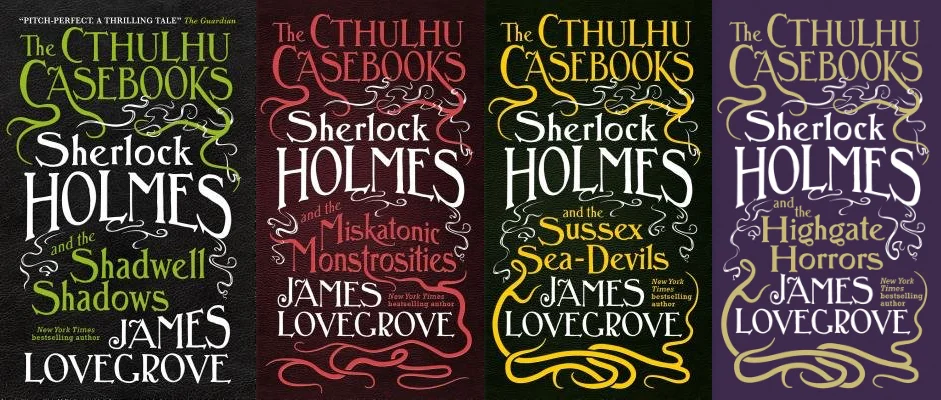
This review will encompass the books and audiobooks of The Cthulhu Casebooks by James Lovegrove. It will cover themes and plot points discussed early in the novel but none so many or so deep it would spoil a reader any more than flipping through the book at an airport bookstore.
I had no idea I was into Sherlock Holmes until I was browsing through Audible and came across a story idea I was very much taken with: Sherlock Holmes meets H.P. Lovecraft.
I’ve always liked the idea of Sherlock Holmes. I was a big fan of House M.D. and everyone compared House and Wilson to Holmes and Watson and, ahh, okay… I see it now… I liked Sherlock on TV but I was never into “classic” Holmes, wearing the deerstalker cap and wandering around more like Poirot than a vigorous young man out to make a name for himself. Likewise, H.P. Lovecraft had created one of those mythologies that influenced so much of the pop culture I’ve imbibed over the years, even if I only got around to reading his actual stories in the last year. And, given that the end of Holmes’ “career” coincided with the peak period of Lovecraft’s writing, I thought, “neat idea, worth a shot.” And, if I remember right, the first book was free with my Audible subscription. So, easy choice.
But, holy shit, the execution of the idea was even better.
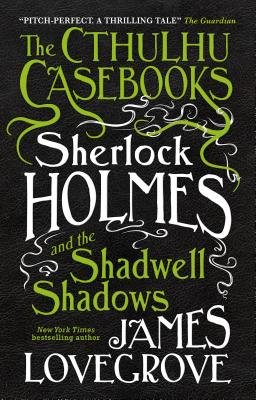
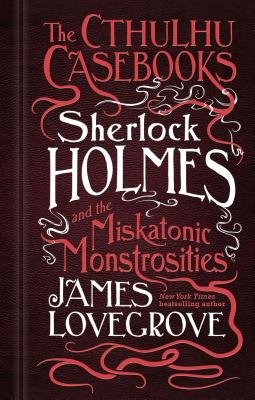
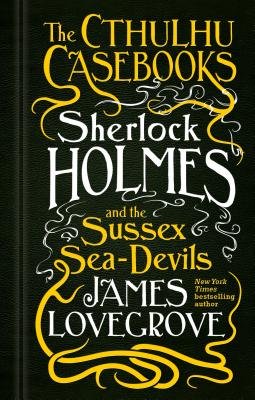
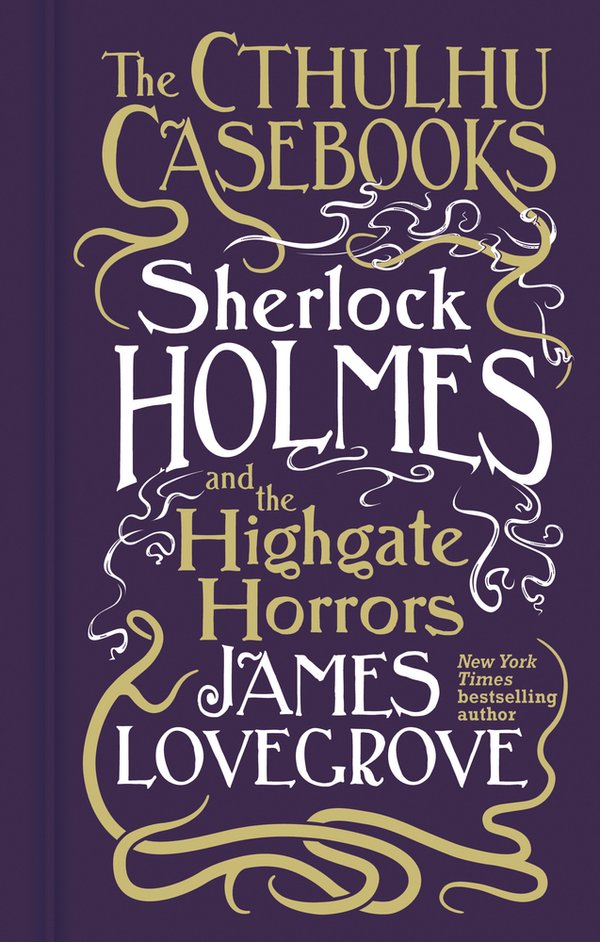
The series begins with a foreward by the “author”, James Lovegrove, a man who it turns out is a distant relative of H.P. Lovecraft, the two sharing a surname that diverged sometime after the latter’s family emigrated to America. Well, he’s also Lovecraft’s last living relative and has inherited a trove of papers that belonged to Lovecraft, given to him by one Dr. John H. Watson, purporting to tell the real story of Sherlock Holmes.
You see, the reason Lovecraft was a correspondent with Watson was because Holmes wasn’t engaged in a game of wits with London’s most nefarious criminals. He was actually protecting the world from the Elder Gods and those who purported to be their agents on Earth enacting their will.
James Lovegrove, a man who it turns out is a distant relative of H.P. Lovecraft
All of this is explained in the first five or so pages, so there’s no spoilers here. In fact, the fun begins once “Watson’s” story begins in earnest. We’re given a revised account of how Watson and Holmes came to know each other. And, at least to me, it read and felt like a genuine Arthur Conan Doyle book, complete with anachronistic phrasing such as “Holmes ejaculated” when today an author might just write “Holmes said, excitedly.”
Originally intended to be a trilogy and then extended, the four books that comprise it each touch on different aspects of Lovecraftian horror. Sherlock Holmes and the Shadwell Shadows deals with the cults and animalistic aspects of humanity that are maybe not as well buried as we might hope. The Miskatonic Monstrosities is a classic tale of what happens when people adventure too far away from civilization. The Sussex Sea-Devils is the closest we get to a classic Holmes mystery tale but infused with war intrigue and enough Lovecraft to produce shivers down one’s spine. And then the series wraps up with the Highgate Horrors, which postulates we’ve been visited by creatures from not so far away before and might be influenced by them even now.
As even Lovecraft generally kept various elements of his own mythos separate, it’s even more impressive that Lovegrove was able to incorporate it so smoothly into the lore of Sherlock Holmes. He did it so fluidly that Lovegrove has written non-Lovecraft influenced Holmes and it feels like something is actually missing from those books. It’s such a fantastic blend of Lovecraftian horror and detective novel that the two go together like chocolate and peanut butter and I was actually sad when I got to the last book and the author announced that there would be no more. Sadly, he’s announced he’s done with Holmes as a character. Which makes the four books we have in this series all the more precious for having been done at all and with such skill.
[…] his voice has become the definitive Holmesian sound and the one I imitate […]
And the series is improved even more when listened to.
Lovegrove has been lucky in that all of his Sherlock Holmes novels (Cthulhu or otherwise) have been narrated by the same talented reader, Dennis Kleinman, who really brings the appropriate Victorian aesthetic and manner to the characters and the story. He can be both laconic and excitable, understated and then shocking. As his narration is usually in the voice of Watson, his voice has become the definitive Holmesian sound and the one I imitate when I irritate my wife with a narrative aside.
All in all, I can’t recommend this series enough. For people who like to listen to stories while painting, here are four incredibly well-written, intelligent blends of Sherlock Holmes and the Elder Gods and hours and hours of entertainment.